Cold–Hot Dual-Mode Hydraulic Pre-Press: How It Raises Oil Yield and Protects Quality
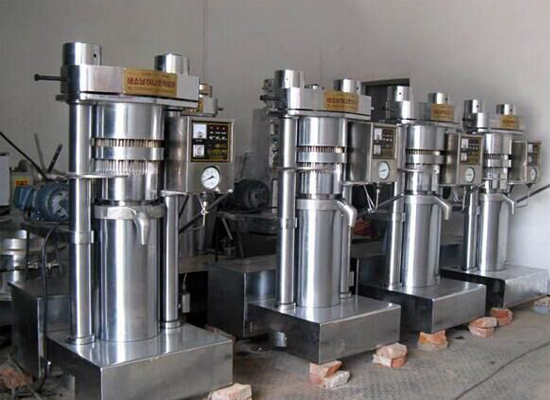
The cold–hot dual-mode hydraulic pre-press is a practical industrial response to two competing objectives in edible oil production: maximize extraction efficiency while maintaining target oil quality. By combining precise hydraulic pressure control with selectable temperature profiles, modern units such as QIE Group’s industrial hydraulic pre-pressing machines enable processors to optimize throughput, lower downstream solvent load, and preserve nutritional and sensory attributes across oilseeds (peanut, soybean, sunflower, etc.).
Core working principle: pressure ramping + temperature staging
The dual-mode system operates on two configurable axes:
- Hydraulic pressure control: PLC-driven pressure profiles that vary from low pre-consolidation (e.g., 60–120 bar) to full squeeze (e.g., 160–220 bar) with programmable ramps and dwell times. This staged press reduces channeling and improves cake consolidation, increasing primary extraction efficiency.
- Temperature management: A temperature-controlled plate or jacket allows the operator to choose "cold mode" (typically ≤50°C) to protect heat-sensitive compounds, or "hot mode" (commonly 90–120°C for preheating) to reduce oil viscosity and promote higher extraction. Precise PID control keeps fluctuation within ±1–2°C for repeatable results.
Why dual-mode outperforms single-mode presses
The key advantage is process flexibility. Cold mode preserves antioxidants and lowers free fatty acid (FFA) formation, producing premium oil for direct edible markets. Hot mode improves yield by 2–7 percentage points (typical improvement ranges observed in the field), reducing the oil remaining for downstream solvent extraction and lowering overall processing cost. When combined, a staged workflow—pre-press in cold mode to capture premium oil, followed by hot re-press for residual oil—delivers a balanced output: better product segmentation and higher aggregate recovery.
Operational parameters—practical adjustment guide
Operators should tune three parameters in concert for optimal performance:
- Pressure setpoints and ramps: Start with a low consolidation stage (60–100 bar, ~20–40s dwell) then escalate to extraction stage (160–220 bar, 30–120s). Adjust ramp speed to avoid sudden cake rupture; finer ramps generally improve yield consistency.
- Temperature selection: For high-quality cold-pressed oil, maintain seed mass at ≤50°C; for maximum yield choose 90–110°C. Use hot-mode only after cold-mode passes or for seed types with naturally higher moisture or tougher cell walls (e.g., soy).
- Pressing time & cycle: Typical hydraulic pre-press cycles range from 30 seconds for small-batch rapid cycles to 3 minutes when maximizing de-oiling. Cycle time should be optimized against throughput targets and downstream solvent capacity.
Material & design considerations affecting uptime and cost
Robust construction—nitrided or hard-faced pressing surfaces, replaceable bushings, sealed high-load bearings and corrosion-resistant feed chambers—reduces wear and maintenance intervals. Expect typical mean-time-between-service (MTBS) improvements of 20–40% when components are selected for abrasive oilseed cakes. Integrated hydraulic oil cooling and filtration extend hydraulic component life and maintain consistent pressure profiles.
Seed-specific configuration recommendations
Different oilseeds benefit from tailored settings. Example starting points:
- Peanut: Cold-mode for gourmet cold-pressed labels (≤50°C) yields high flavor retention; hot-mode at 95–105°C increases total recovery by ~3–6% for mass-market production.
- Soybean: Preconditioning to 95–110°C prior to pressing generally improves cell rupture; combine with longer dwell times to optimize de-oiling.
- Sunflower: Moderately heated pressing (80–95°C) finds a balance between color stability and yield; sunflower kernels respond well to shorter, higher-pressure cycles.
.jpg)
Quick comparison: cold vs hot vs staged dual-mode
| Metric | Cold Mode | Hot Mode | Staged Dual-Mode |
|---|---|---|---|
| Typical yield (primary press) | Lower (baseline) | Higher (+2–7% vs cold) | Best overall recovery |
| Oil quality (FFA, antioxidants) | Superior (lower FFA) | Reduced antioxidants | Segmented: premium + bulk |
| Energy & downstream load | Lower thermal energy | Higher thermal energy use | Optimized overall cost |
Field outcomes: expected performance gains
In documented plant retrofits, switching to a dual-mode hydraulic pre-press plus simple process optimization has produced:
- Net increase in total oil recovery of 2–6 percentage points (depending on seed and prior equipment).
- Reduction in downstream solvent load by 8–20%, reducing solvent consumption and solvent-stage energy use.
- Improved product segmentation capacity, enabling a higher-margin cold-pressed label while maintaining high-volume hot-pressed output.
“After integrating the dual-mode hydraulic pre-press we saw our peanut primary recovery climb nearly 4% while keeping the cold-pressed SKU’s flavor profile intact—maintenance intervals also lengthened.” — regional edible oils plant manager
Process flow (recommended):
For processors evaluating upgrades, the critical evaluation criteria are reproducible pressure/temperature control, component materials and serviceability, and ability to integrate with existing preconditioning and downstream extraction lines.