How to Plan Edible Oil Processing Plant Equipment: Capacity, Feedstock, Process & Line Configuration
Qi'e Grain and Oil Machinery Co., Ltd.
2026-08-06
Industry Guide
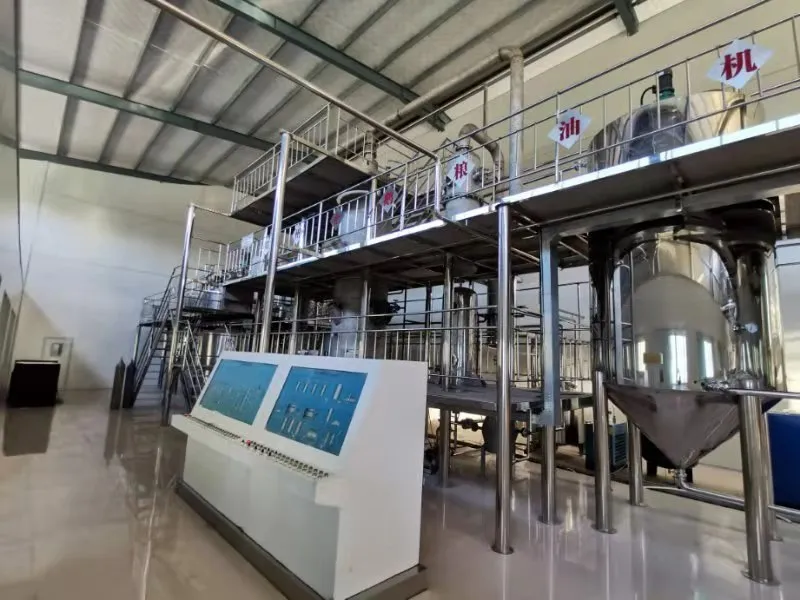
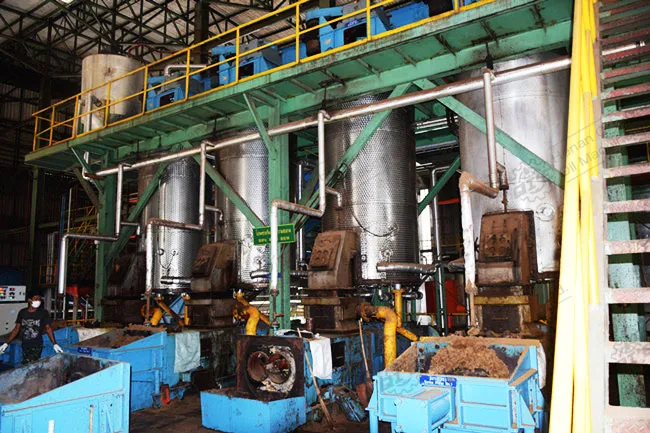
Qi'e Grain and Oil Machinery Co., Ltd. explains how to plan edible oil processing plant equipment based on capacity targets, oilseed type, pressing vs solvent extraction, refining standards, automation level, site conditions, and target markets—helping buyers build an initial equipment and line configuration checklist.
Planning edible oil processing plant equipment is not only about buying machines—it is about matching capacity targets, feedstock characteristics, process route (pressing vs solvent extraction), refining standards, automation level, and site utilities into a workable line configuration.
This guide from Qi'e Grain and Oil Machinery Co., Ltd. (企鹅集团) helps buyers build an initial configuration checklist for projects in Asia, Africa, and South America, covering typical decisions from oilseed preparation to refining and packaging interfaces.
Planning outputs
- A practical preliminary equipment list by section
- A clear choice between pressing and solvent extraction
- Refining scope aligned to target markets
- Utilities & workshop requirements to validate early
1) Define your key planning inputs (before equipment selection)
To avoid under/over-sizing and rework, confirm the following inputs first. These variables directly determine the correct oil mill equipment selection and oil production line configuration.
- Target capacity (TPD): daily throughput target and expected operating hours.
- Feedstock/oilseed type: e.g., soybean, sunflower, palm kernel, and other vegetable oil materials; note cleanliness, moisture, shell/hull content, and variability.
- Process route: mechanical pressing only, or pre-press + solvent extraction; confirm product positioning (crude oil vs higher yield target).
- Refining requirement: target quality and standards for local or export markets (neutralized, bleached, deodorized, etc., depending on product plan).
- Automation level: manual/semi-auto/automatic expectations, staffing availability, and maintenance capability.
- Site conditions: workshop footprint & height, load-bearing, material flow, local safety requirements, and environmental constraints.
- Utilities availability: power supply, steam/thermal oil heating options, water, compressed air, and ventilation.
Tip: When you provide the above inputs, it becomes easier to build a first-pass line layout and a realistic procurement scope—especially for projects targeting quick commissioning.
2) Choose the process route: pressing vs solvent extraction
Mechanical pressing (cold/hot pressing options)
- Typically selected for simpler line configuration and straightforward operation.
- Often paired with oilseed preparation equipment (cleaning, crushing, flaking, cooking/conditioning) depending on the feedstock.
- Can connect to edible oil refining equipment to meet market requirements.
Solvent extraction (often with pre-press)
- Considered when aiming for high oil recovery and when the project scope includes extraction and solvent handling sections.
- Requires stricter planning for safety, utilities, and workshop conditions (ventilation, explosion-proof considerations, and operational management).
- Usually followed by refining to reach finished edible oil specifications.
Quick decision prompts (buyer checklist)
- What is your capacity target (TPD) and expected annual operating schedule?
- Does your feedstock require dehulling, conditioning, or special pre-treatment?
- Do you prioritize simpler operation, or higher recovery with a broader process scope?
- What refining level is needed for your target market (local retail, industrial use, export)?
- Can your site support the required utilities and safety management for the chosen route?
3) Build a line-by-line equipment configuration (from receiving to refining)
A complete edible oil line is typically planned in sections. The exact configuration depends on feedstock and process route, but the structure below helps you create an initial procurement checklist.
| Plant section |
Typical equipment scope (configuration checklist) |
Planning notes |
| Raw material receiving & cleaning |
Conveying, screening/cleaning, destoning, magnetic separation |
Define impurity level and handling capacity to protect downstream machines. |
| Preparation / pre-treatment |
Crushing, flaking, cooking/conditioning, optional dehulling (by seed type) |
Feedstock type drives selection; plan for stable moisture/temperature control. |
| Pressing section |
Oil press, filtration/clarification interface, cake handling |
Specify hot vs cold pressing requirement and target oil clarity at outlet. |
| Solvent extraction (if selected) |
Extractor, desolventizing/toasting, solvent recovery related units |
Confirm site safety constraints, ventilation, and operator readiness early. |
| Edible oil refining |
Degumming/neutralization, bleaching, deodorization (scope by requirement) |
Align refining standard to target market; plan heating medium and vacuum needs. |
| Storage & interfaces |
Oil tanks, pumps, valves/piping, basic instrumentation |
Define buffer capacity for stable production; consider future expansion points. |
4) Refining standards & market requirements (what to clarify with buyers/importers)
Refining configuration should be decided based on the target market requirements (local distribution vs export), product positioning, and compliance expectations. If your project serves multiple markets, plan flexibility in the refining section and storage segmentation.
- Product scope: crude oil only, semi-refined oil, or fully refined edible oil.
- Quality targets: required clarity, odor profile, stability expectations, and packaging compatibility.
- Documentation: confirm what certificates, inspection items, or factory acceptance expectations apply in your region.
Note:
Refining requirements vary by country and customer channel. Clarifying them early helps avoid mismatched configuration and unnecessary capital spending.
5) Automation level, utilities & workshop conditions (often missed in early planning)
Automation & operation
- Define desired control level (manual/semi-auto/automatic) and operator training plan.
- Plan instrumentation interfaces for stable temperature, flow, and basic safety control.
- Consider maintenance accessibility and spare parts strategy suitable for your region.
Utilities & site readiness
- Power: verify voltage, frequency, and stability; plan for peak loads.
- Heating: evaluate steam vs thermal oil options based on refining/process needs.
- Water & drainage: confirm availability and workshop drainage layout.
- Workshop: ensure enough height/space for conveying and safe maintenance.
6) Practical preliminary checklist for buyers (copy-ready for your RFQ)
When you contact suppliers, providing the information below speeds up equipment proposal and reduces back-and-forth. You can paste this into your RFQ email.
- Capacity target (TPD): ____ ; operating hours/day: ____
- Feedstock/oilseed: ____ ; expected moisture/impurity: ____
- Process route: pressing / pre-press + solvent extraction
- Refining requirement: crude / semi-refined / refined; target market: local / export
- Automation preference: manual / semi-auto / automatic
- Utilities available: power ____ ; heating ____ ; water ____ ; compressed air ____
- Site info: workshop size ____ ; height ____ ; installation time window ____
Qi'e Grain and Oil Machinery Co., Ltd. provides oil pressing equipment, oil production line equipment, and edible oil refining equipment—supporting planning, installation guidance, and technical service for B2B buyers.
Request a configuration discussion
About Qi'e Grain and Oil Machinery Co., Ltd. (企鹅集团)
Qi'e Grain and Oil Machinery Co., Ltd. is a specialized manufacturer focusing on grain and oil processing machinery, including oil pressing equipment, oil production line equipment, and edible oil refining equipment. With long-term experience serving international projects, we support customers with practical planning and engineering-oriented equipment configuration.
Our cooperation principle emphasizes integrity, mutual benefit, and long-term partnership—helping buyers in Asia, Africa, and South America move from concept to a feasible plant equipment plan with clear process boundaries and implementable scope.

 175
|
175
|
 Qi'e Grain and Oil Machinery Co., Ltd.
grain and oil machinery project delivery
complete production line
installation and commissioning
after-sales service
Qi'e Grain and Oil Machinery Co., Ltd.
grain and oil machinery project delivery
complete production line
installation and commissioning
after-sales service