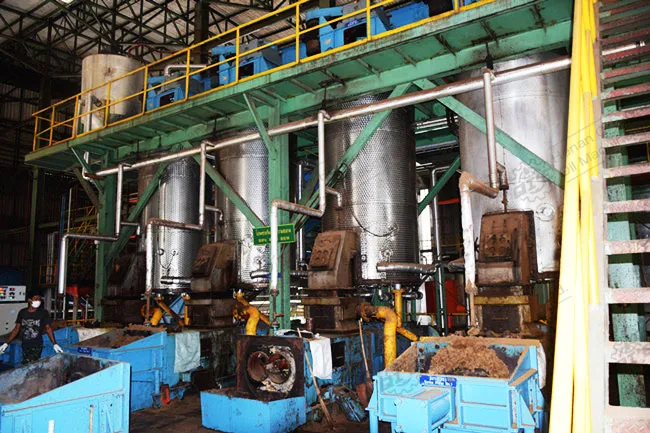
Edible oil processing equipment refers to the coordinated set of machines used to convert oilseeds into market-ready edible oil. In a typical plant workflow, pressing and/or solvent extraction produces crude oil, and refining improves color, odor, stability, and compliance with quality targets—at the capacity scale your mill needs.
As a B2B manufacturer and project solution provider, Qi'e Grain and Oil Machinery Co., Ltd. (Qi'e Group) supports oil mills and edible oil project owners in planning, configuring, and integrating equipment modules into a complete production line—especially for mainstream oilseeds such as soybean.
While every project is different, most edible oil plants can be described through a stable equipment structure. You may deploy modules as standalone machines or as an integrated line, depending on oilseed characteristics and production goals.
Typically includes cleaning, sizing, crushing/flaking, conditioning, and other steps that help stabilize incoming material and improve oil release efficiency. Proper preparation supports either pressing or solvent extraction and contributes to consistent downstream performance.
Mechanical pressing uses pressure to separate oil from oilseed material. It is commonly used as a main process route for certain seeds, or as a pre-press step before solvent extraction—depending on economics and target residual oil in meal.
Solvent extraction is used when the process aims for high oil recovery from prepared flakes or pre-pressed cake. It usually involves extraction, solvent recovery, and closed-loop management to control emissions and improve energy utilization—designed around safety and operational discipline.
Refining treats crude oil to meet required quality characteristics. Typical refinery sections address impurities and quality attributes (e.g., clarity, odor, stability), and the actual configuration is selected based on crude oil type and the finished oil positioning.
A complete line requires coordinated control, stable material transfer, and utility matching. Higher automation helps reduce manual intervention, improve repeatability, and support consistent plant operation—especially when integrating pressing, extraction, and refining into one workflow.
Many edible oil projects follow a staged workflow. The right route is not “one-size-fits-all”; it is chosen based on oilseed type (e.g., soybean), target capacity, and the quality level required for the final edible oil.
Practical note: selecting modules is also a project management decision—equipment footprint, utilities, and operator skill requirements should align with your mill’s long-term operating plan.
For soybean processing, Qi'e Group provides a Fully Automatic Soybean Oil Production Line designed for an end-to-end route—from soybean cleaning, crushing and pressing to extraction and refining—built around efficiency, automation, and sustainable operation goals.
Soybean projects commonly evaluate combined routes (pressing + extraction + refining) to balance recovery and finished oil targets. The most suitable arrangement depends on your raw material condition and meal/oil quality requirements.
Capacity influences equipment sizing, utility requirements, and automation strategy. Planning for expansion at the design stage helps avoid later bottlenecks and mismatched interfaces between modules.
Refining configuration and control points should be aligned with the intended market positioning and compliance needs. Clear quality targets make it easier to select appropriate refining steps and instrumentation.
If you share your oilseed type, expected throughput, and desired finished oil grade, Qi'e Group can help translate those requirements into a coordinated equipment list and integration plan—covering pressing, solvent extraction, and refining modules as a complete line.
Beyond manufacturing edible oil processing equipment, Qi'e Grain and Oil Machinery Co., Ltd. supports end-to-end project execution for oil mills—focused on practical commissioning and long-term operability.
 216
|
216
|
 Qi'e Grain and Oil Machinery Co., Ltd. edible oil production line planning oil mill equipment selection oilseed type and process route production capacity and automation
353
|
peanut oil production line maintenance peanut oil equipment preventive maintenance peanut oil press troubleshooting production line lubrication management peanut oil filtration system cleaning
92
|
cold-pressed rapeseed oil solvent extraction rapeseed oil rapeseed oil production process selection oil yield vs nutrition retention energy consumption and equipment investment
63
|
Qi'e Grain and Oil Machinery Co., Ltd. edible oil refining equipment degumming process deacidification process bleaching and deodorization
175
|
Qi'e Grain and Oil Machinery Co., Ltd. grain and oil machinery project delivery complete production line installation and commissioning after-sales service
Qi'e Grain and Oil Machinery Co., Ltd. edible oil production line planning oil mill equipment selection oilseed type and process route production capacity and automation
353
|
peanut oil production line maintenance peanut oil equipment preventive maintenance peanut oil press troubleshooting production line lubrication management peanut oil filtration system cleaning
92
|
cold-pressed rapeseed oil solvent extraction rapeseed oil rapeseed oil production process selection oil yield vs nutrition retention energy consumption and equipment investment
63
|
Qi'e Grain and Oil Machinery Co., Ltd. edible oil refining equipment degumming process deacidification process bleaching and deodorization
175
|
Qi'e Grain and Oil Machinery Co., Ltd. grain and oil machinery project delivery complete production line installation and commissioning after-sales service