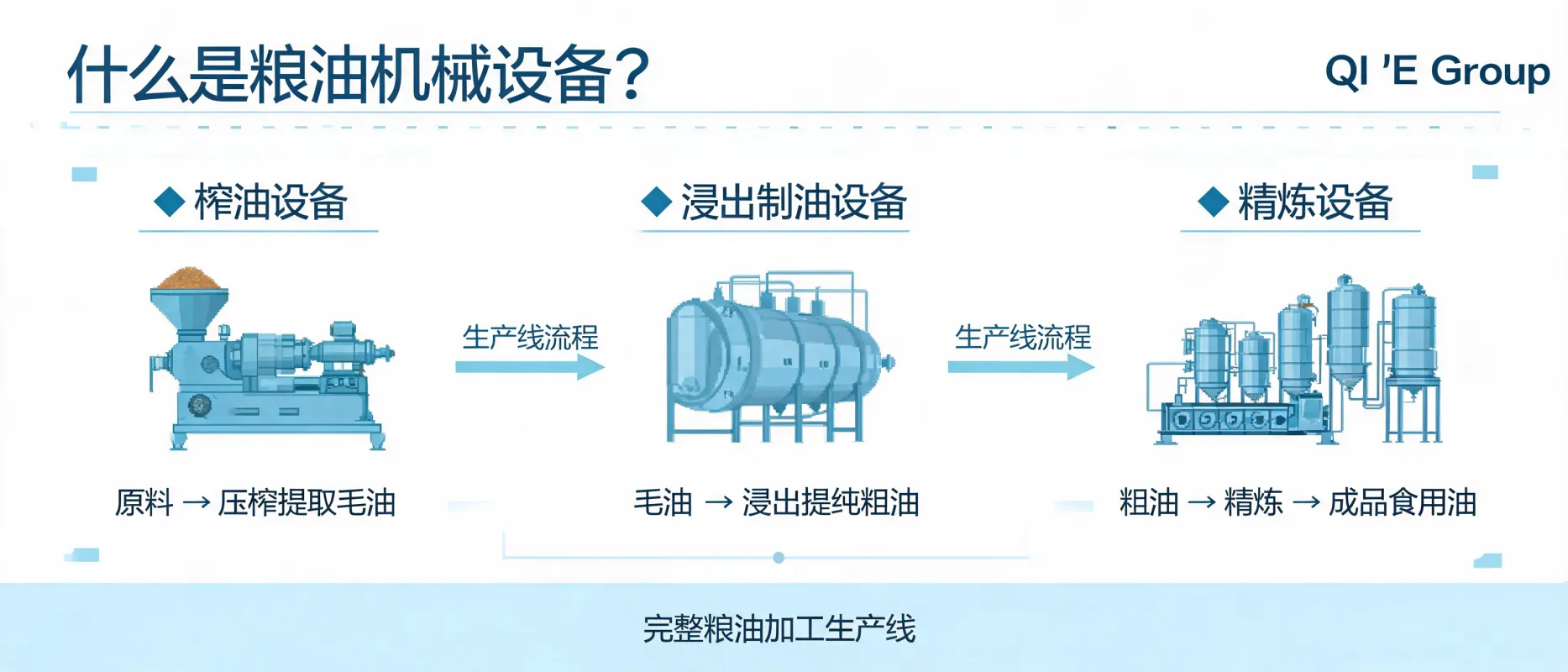
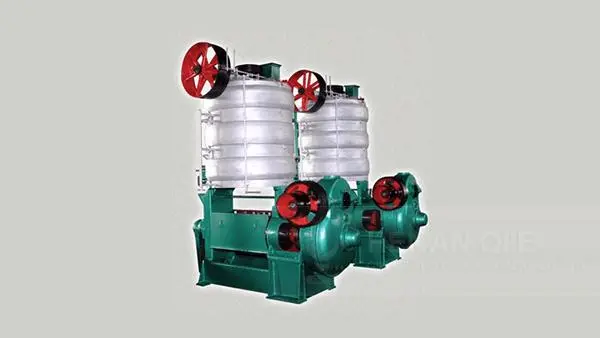
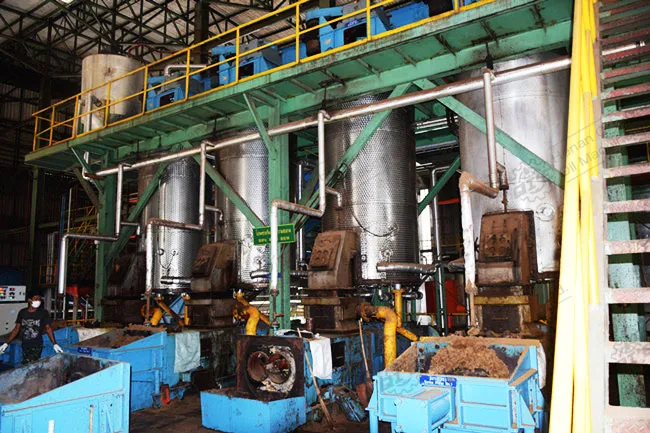
Selecting edible oil processing line equipment is a system decision—feedstock behavior, target throughput, oil quality requirements, automation level, energy control, and long-term service all affect CAPEX, OPEX, and production stability. As a mechanical equipment manufacturer specializing in grain & oil machinery, Qi'e Grain and Oil Machinery Co., Ltd. (企鹅集团) supports B2B investors, plant owners, EPC teams, and processors with pressing, solvent extraction, refining, and complete line integration—especially configurable solutions such as the Fully Automatic Soybean Oil Production Line.
This page provides a practical, engineering-oriented selection guide you can use to compare line configurations and reduce decision risk before procurement.
Different oilseeds behave differently under mechanical and solvent processes. For soybeans, a typical industrial route evaluates: cleaning → crushing/flaking → conditioning → pressing and/or solvent extraction → desolventizing (if applicable) → crude oil clarification → refining. The optimal route depends on your target capacity and the required oil quality and stability.
Capacity planning is not only “tons per day”—it also impacts equipment sizing, buffer bins, conveying, utilities, and automation architecture. A selection method that works well for investors and EPC teams is:
Practical tip: When comparing suppliers, ask for a clear block flow description (pre-treatment, extraction, refining, utilities) and how each block is sized and interfaced.
Automation is not an “add-on”; it directly affects product consistency, operator workload, and error reduction. For edible oil processing lines, a reasonable evaluation framework includes:
Refining selection should be driven by your target market, compliance expectations, and crude oil characteristics. In a complete line configuration, refining typically determines: oil clarity targets, odor profile expectations, downstream packaging suitability, and overall operating discipline. Qi'e Grain and Oil Machinery Co., Ltd. provides edible oil refining equipment and complete line integration so pressing/extraction and refining operate as one system rather than isolated machines.
For modern edible oil plants, energy and environmental control are core selection criteria—especially when solvent extraction is included. When comparing equipment, focus on:
Qi'e Grain and Oil Machinery Co., Ltd. designs soybean oil production lines with a focus on high efficiency, energy-saving operation, and environmental protection, while keeping equipment configuration aligned with real project constraints.
The Fully Automatic Soybean Oil Production Line is designed to support efficient and sustainable soybean oil manufacturing, covering key stages from soybean cleaning and crushing to extraction and refining—while emphasizing reduced operational errors through automation and intelligent control.
Qi'e Grain and Oil Machinery Co., Ltd. can align complete line configuration with your capacity, automation, and refining targets—supporting both new plant builds and upgrades.
For edible oil processing projects, long-term performance depends on commissioning quality and sustained technical support. Qi'e Grain and Oil Machinery Co., Ltd. provides end-to-end support that can include: solution design, equipment supply, installation guidance, commissioning, and technical service—helping teams keep production stable after start-up.
If you are planning a soybean oil plant or upgrading an existing line, you can use the evaluation points above to structure internal decisions, compare suppliers on consistent criteria, and finalize a configuration that matches your feedstock, capacity, automation, and refining objectives.
 167
|
167
|
 Qi'e Grain and Oil Machinery Co., Ltd. grain and oil processing equipment procurement unit price comparison complete production line configuration supplier evaluation and after-sales technical support
89
|
Qi'e Grain and Oil Machinery grain and oil machinery equipment oil press machine edible oil production line edible oil refining equipment
38
|
Qi'e Grain and Oil Machinery turnkey grain and oil machinery solution oil pressing equipment edible oil refining equipment full line delivery
487
|
Qi'e Grain and Oil Machinery Co., Ltd. grain and oil machinery equipment oil pressing machinery oil production line edible oil refining equipment
492
|
Qi'e Grain and Oil Machinery Co., Ltd. edible oil processing equipment oil pressing equipment vegetable oil solvent extraction equipment edible oil refining equipment
Qi'e Grain and Oil Machinery Co., Ltd. grain and oil processing equipment procurement unit price comparison complete production line configuration supplier evaluation and after-sales technical support
89
|
Qi'e Grain and Oil Machinery grain and oil machinery equipment oil press machine edible oil production line edible oil refining equipment
38
|
Qi'e Grain and Oil Machinery turnkey grain and oil machinery solution oil pressing equipment edible oil refining equipment full line delivery
487
|
Qi'e Grain and Oil Machinery Co., Ltd. grain and oil machinery equipment oil pressing machinery oil production line edible oil refining equipment
492
|
Qi'e Grain and Oil Machinery Co., Ltd. edible oil processing equipment oil pressing equipment vegetable oil solvent extraction equipment edible oil refining equipment