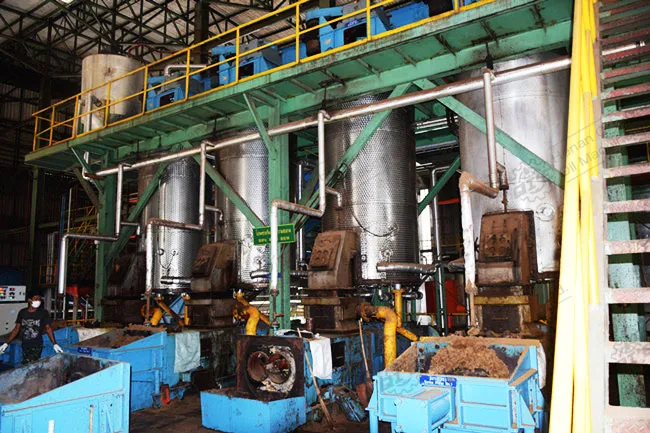
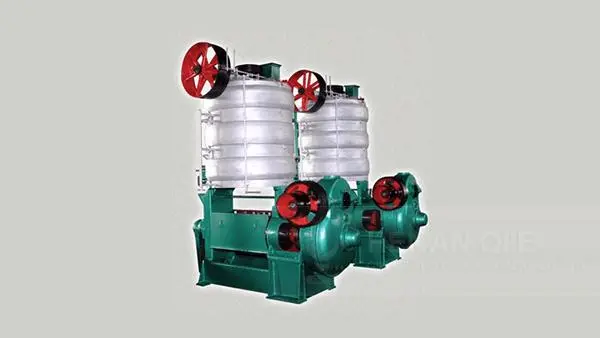
Selecting edible oil production line equipment is a system-level decision: pretreatment, pressing, solvent extraction, and refining must work as one stable process, aligned with your oilseed type, capacity plan, automation target, and finished oil quality requirements. Qi'e Grain and Oil Machinery Co., Ltd. (企鹅集团) provides engineering-oriented support for configuring complete lines—especially for fully automatic soybean oil production lines—from process design and equipment selection to installation guidance and technical service.
This page explains how pretreatment, oil pressing equipment, solvent extraction equipment, and edible oil refining equipment connect in practice—and how to evaluate configuration options for soybean oil and other vegetable oils.
Pretreatment is the “foundation” of yield, stability, and downstream cleanliness. For soybean oil processing, typical objectives include removing impurities, conditioning moisture/temperature, and preparing flakes/particles suitable for pressing or solvent extraction.
Oil pressing equipment converts prepared soybean material into crude oil and press cake. Pressing is often used as a primary extraction step or as a pre-press stage before solvent extraction, depending on capacity and oil recovery goals.
When higher oil recovery and large-scale production are required, solvent extraction equipment can be configured—commonly after pretreatment and/or pre-pressing. Proper system integration (closed-loop operation, recovery, and safety measures) is essential for stable, compliant operation.
Edible oil refining equipment turns crude soybean oil into finished oil aligned with your product specifications. Refining steps are selected according to your quality goals and applicable standards, and should be matched with upstream crude oil characteristics.
| Route | Typical objective | Equipment focus | Best-fit scenarios |
|---|---|---|---|
| Pretreatment + Pressing + Refining | Streamlined mechanical extraction with clear line logic | Stable pretreatment, efficient press, matched refining section | Projects prioritizing simpler operation and practical investment planning |
| Pretreatment + (Pre-press) + Solvent Extraction + Refining | Higher oil recovery for industrial-scale processing | Extraction system integration, closed-loop and recovery planning | Large-scale soybean oil processors targeting efficient, continuous operation |
| Flexible line (multi-seed adaptable) | Adaptability to soybean and other vegetable oils with adjustments | Modular selection, control strategy, and adjustable processing parameters | Processors needing a line that can be adjusted for rapeseed/cottonseed, etc. |
Note: The final route should be determined through engineering evaluation of your raw material, capacity target, automation requirements, and local compliance expectations.
A fully automatic soybean oil production line is not only about fewer operators. It should deliver repeatable control and consistent product quality through coordinated monitoring and interlocks across the whole process.
As a mechanical-industry manufacturer focused on grain & oil machinery, Qi'e Grain and Oil Machinery Co., Ltd. provides oil pressing equipment, oil production line equipment, and edible oil refining equipment for B2B customers in Asia, Africa, and South America. For soybean oil projects, we typically support:
If you share your oilseed type, target capacity, automation preference, and finished oil goals, Qi'e Grain and Oil Machinery can help you evaluate a suitable edible oil production line equipment configuration—covering pretreatment, pressing, solvent extraction, and refining—based on engineering logic and practical implementation needs.
 492
|
492
|
 Qi'e Grain and Oil Machinery Co., Ltd. edible oil processing equipment oil pressing equipment vegetable oil solvent extraction equipment edible oil refining equipment
363
|
Qi'e Grain and Oil Machinery Co., Ltd. fully automatic soybean oil production line soybean oil extraction and refining edible oil processing equipment oil production line solution
72
|
Qi'e Grain and Oil Machinery Co., Ltd. edible oil processing solution oil pressing equipment edible oil production line edible oil refining equipment
364
|
Qi'e Grain and Oil Machinery grain and oil processing machinery oil pressing equipment solvent extraction equipment edible oil refining equipment
30
|
Qi'e Grain and Oil Machinery Co., Ltd. grain and oil processing equipment solution soybean oil production line edible oil refining equipment oil mill equipment
Qi'e Grain and Oil Machinery Co., Ltd. edible oil processing equipment oil pressing equipment vegetable oil solvent extraction equipment edible oil refining equipment
363
|
Qi'e Grain and Oil Machinery Co., Ltd. fully automatic soybean oil production line soybean oil extraction and refining edible oil processing equipment oil production line solution
72
|
Qi'e Grain and Oil Machinery Co., Ltd. edible oil processing solution oil pressing equipment edible oil production line edible oil refining equipment
364
|
Qi'e Grain and Oil Machinery grain and oil processing machinery oil pressing equipment solvent extraction equipment edible oil refining equipment
30
|
Qi'e Grain and Oil Machinery Co., Ltd. grain and oil processing equipment solution soybean oil production line edible oil refining equipment oil mill equipment