Planning an edible oil production line starts long before equipment purchasing. The most common rework in oil mill projects comes from unclear upfront requirements: feedstock variability, mismatched capacity targets, an unsuitable process route (pressing vs. solvent extraction), or refining grade not aligned with the intended market.
This guide from Qi'e Grain and Oil Machinery Co., Ltd. summarizes the key inputs you should define—oilseed type, target capacity (TPD), process route, refining grade, layout & utilities, environmental requirements, and automation—so you can build a practical equipment selection checklist.
Your oilseed determines the process route, pre-treatment requirements, and the expected oil/cake quality. Typical feedstocks include soybean, sunflower, palm (including palm kernel), and other vegetable oil materials.
If you expect frequent feedstock switching, build flexibility into cleaning, pre-treatment, and process control. A line optimized for one material may not be optimal for another without adjustments.
Capacity is commonly defined as TPD (tons per day), but for accurate planning you also need operating hours, shifts, and uptime assumptions. These parameters affect equipment sizing, buffer bins, and utilities.
Selecting the correct route is a cornerstone of oil mill equipment selection. Many projects use pressing, extraction, or a combination depending on feedstock and capacity.
Practical tip: decide the route by considering oilseed type and process route together with capacity, desired product quality, site conditions, and compliance requirements. Route choice drives not only core equipment, but also utilities, building design, and operating procedures.
After crude oil production, refining configuration should align with your required oil grade and downstream use. The goal is to plan a refining line that fits your product specification rather than overbuilding.
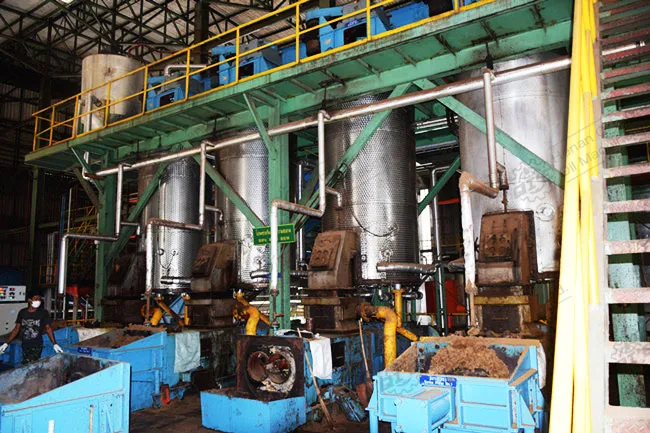
A strong layout supports smooth material movement, safer operations, and easier maintenance. For edible oil plants, layout should follow the process sequence: receiving → preparation → pressing/extraction → oil handling → refining → storage/dispatch.
Continuity reduces bottlenecks and unnecessary conveying. It also helps ensure stable oil quality by avoiding long, uncontrolled holding times between key steps.
Utilities are part of the process design, not an afterthought. Confirming the availability and constraints of steam, electric power, water, and compressed air helps you select practical equipment and avoid late-stage redesign.
If your line includes solvent extraction, integrate safety systems and emission control requirements into the design phase. Local regulations and project-specific standards should be confirmed before final equipment configuration.
The right automation level balances investment, staffing, and process stability. Define your preferred control approach (manual/semi-automatic/automatic) based on operator skill availability, quality targets, and maintenance capability.
Use the checklist below to organize requirements when contacting an equipment supplier. A clear list speeds up technical alignment and reduces misunderstandings.
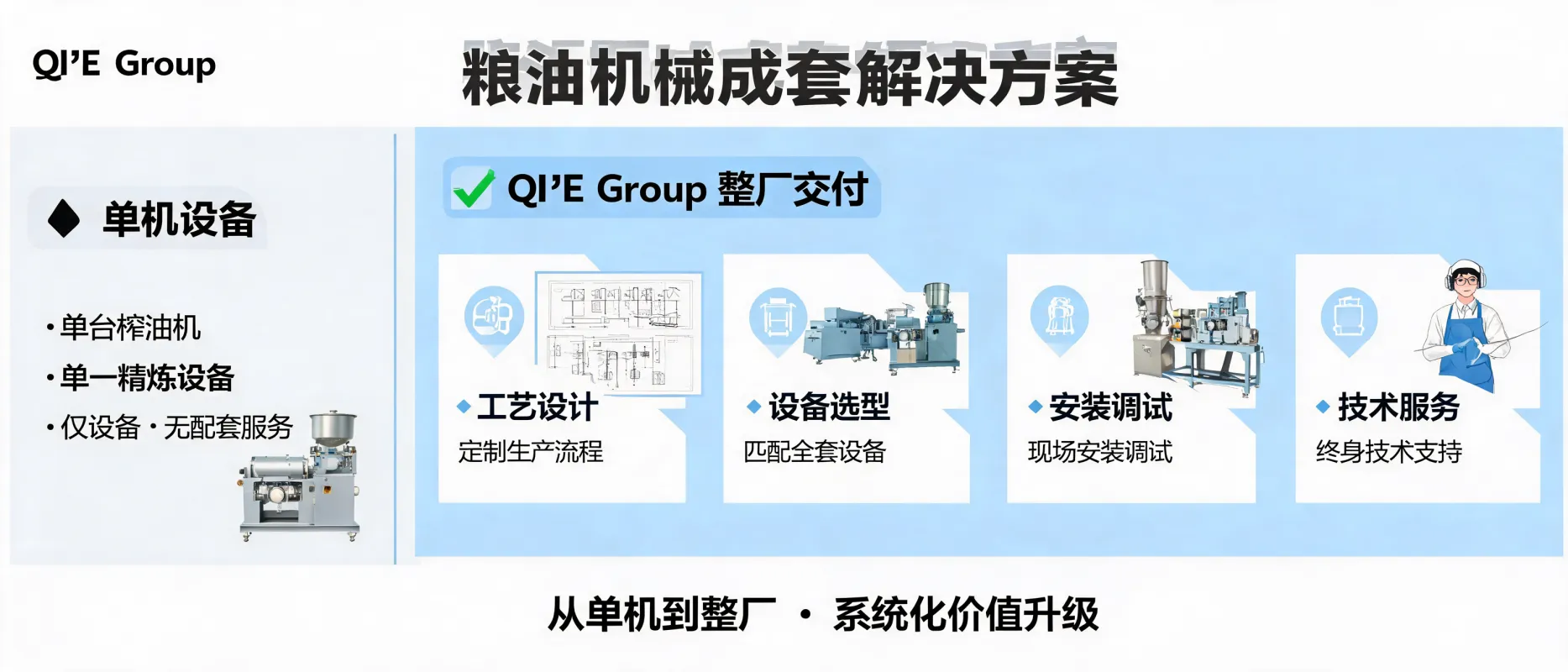
As a B2B manufacturer focused on oil pressing equipment, oil production line equipment, and oil refining equipment, Qi'e Grain and Oil Machinery Co., Ltd. supports project owners with planning-oriented collaboration—clarifying inputs, mapping a feasible process flow, and aligning equipment configuration with site conditions and operational goals.
If you share your feedstock, capacity target, preferred process route, and site utilities, our team can help you refine an equipment checklist for a practical, buildable edible oil production line.
 120
|
120
|
 Qi'e Grain and Oil Machinery Co., Ltd.
edible oil production line
project preparation checklist
plant layout planning
installation and commissioning service
362
|
Qi'e Grain and Oil Machinery
grain and oil processing machinery
oil pressing equipment
solvent extraction equipment
edible oil refining equipment
38
|
peanut oil production line maintenance
peanut oil press maintenance
peanut oil filtration system troubleshooting
lubrication management for oil mill equipment
small oil mill preventive maintenance
165
|
Qi'e Grain and Oil Machinery Co., Ltd.
grain and oil processing equipment procurement
unit price comparison
complete production line configuration
supplier evaluation and after-sales technical support
350
|
peanut oil production line maintenance
peanut oil equipment preventive maintenance
peanut oil press troubleshooting
production line lubrication management
peanut oil filtration system cleaning
Qi'e Grain and Oil Machinery Co., Ltd.
edible oil production line
project preparation checklist
plant layout planning
installation and commissioning service
362
|
Qi'e Grain and Oil Machinery
grain and oil processing machinery
oil pressing equipment
solvent extraction equipment
edible oil refining equipment
38
|
peanut oil production line maintenance
peanut oil press maintenance
peanut oil filtration system troubleshooting
lubrication management for oil mill equipment
small oil mill preventive maintenance
165
|
Qi'e Grain and Oil Machinery Co., Ltd.
grain and oil processing equipment procurement
unit price comparison
complete production line configuration
supplier evaluation and after-sales technical support
350
|
peanut oil production line maintenance
peanut oil equipment preventive maintenance
peanut oil press troubleshooting
production line lubrication management
peanut oil filtration system cleaning