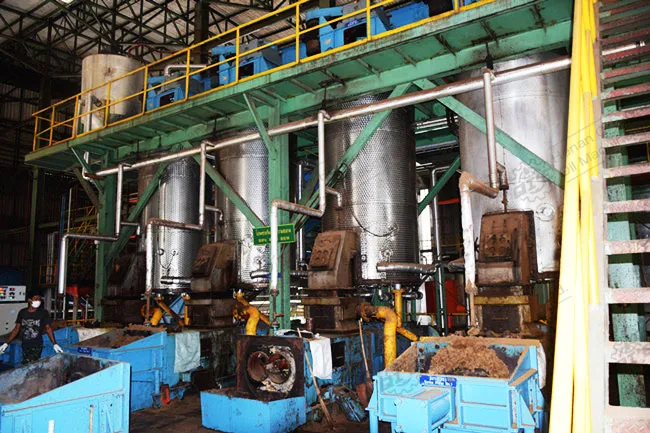
Building an edible oil production line is a multi-discipline project—process design, equipment selection, utilities, plant layout, environmental compliance, installation & commissioning, and operator training all need to be defined before you can compare suppliers on the same basis.
Qi'e Grain and Oil Machinery Co., Ltd. (企鹅集团) provides this pre-project checklist to help investors, plant owners, and procurement teams clarify requirements and prepare the information needed for accurate solution evaluation.
Raw material type and quality determine the feasible process route (pressing, solvent extraction, or combined) and key equipment modules.
Tip: When discussing with suppliers, provide oilseed photos, a brief description of impurities, and the expected throughput window; this speeds up equipment configuration.
For efficient supplier comparison, list which sections are required and whether each section is included, optional, or reserved for later.
| Process Section | Typical Purpose | What You Should Confirm Before Quotation |
|---|---|---|
| Pretreatment (cleaning / conditioning) | Stabilize feed quality and protect core equipment | Incoming impurities level, moisture range, desired cleaning depth |
| Pressing (mechanical) | Produce crude oil + oil cake; often simpler operations | Oilseed type, target throughput, cake handling and conveying |
| Solvent extraction (optional) | Further oil recovery from cake/flakes when applicable | Local safety/environmental requirements, utilities readiness, scope boundaries |
| Refining (edible oil refining set) | Improve oil quality to match market/usage expectations | Crude oil characteristics, desired refining outcome, automation level |
| Storage & filling (as needed) | Bulk storage, blending, retail/bulk filling preparation | Packaging format, tank volume, loading/unloading workflow |
| Utilities & auxiliary (whole plant) | Ensure stable operation and maintainability | Power/steam/water/air availability, spare parts strategy, maintenance staffing |
If you are uncertain about whether pressing-only or extraction + refining is appropriate, prepare your oilseed type, capacity target, and expected product scope first—then request a configuration proposal that clearly lists included sections and boundaries.
A workable plant layout reduces cross-traffic, improves safety, and makes maintenance easier. Provide suppliers with the most accurate site information available.
Practical input that helps: a simple CAD drawing or hand sketch with dimensions, plus photos of the workshop and surrounding access.
Before procurement, align your project with local regulatory expectations for emissions, noise, fire protection, and workplace safety. This avoids scope gaps and rework during installation.
For solvent-related sections (when applicable), confirm local permitting and safety design requirements early and ensure scope clarity with your chosen supplier.
A clear installation and commissioning service plan makes delivery timelines, responsibilities, and acceptance criteria measurable.
Keeping requests standardized allows your procurement team to compare quotations fairly and identify hidden scope gaps early.
Qi'e Grain and Oil Machinery Co., Ltd. is focused on oil pressing equipment, oil production line equipment, and edible oil refining equipment, providing integrated support from planning and design to installation guidance and technical service for B2B customers in Asia, Africa, and South America.
If you share your oilseed type, target capacity, site constraints, and expected scope (pressing/extraction/refining/filling), our team can align a practical configuration and service plan for your project evaluation.
For accurate budgeting, always request that quotations list included equipment, auxiliaries, installation/commissioning responsibilities, and utility assumptions. This helps prevent change orders and delays after delivery.
 139
|
139
|
 Qi'e Grain and Oil Machinery Co., Ltd.
edible oil processing plant planning
oil mill equipment selection
oil production line configuration
pressing vs solvent extraction process
88
|
cold-pressed rapeseed oil
solvent extraction rapeseed oil
rapeseed oil production process selection
oil yield vs nutrition retention
energy consumption and equipment investment
232
|
rapeseed oil pretreatment
moisture control 5-8%
conditioning temperature control
rapeseed cooking and flaking parameters
oil yield improvement
442
|
Qi'e Grain and Oil Machinery Co., Ltd.
overseas project delivery
grain and oil machinery installation and commissioning
stable commissioning and start-up
long-term operation and maintenance
309
|
peanut oil production line maintenance
screw press maintenance
filtration system maintenance
equipment lubrication management
peanut oil equipment troubleshooting
Qi'e Grain and Oil Machinery Co., Ltd.
edible oil processing plant planning
oil mill equipment selection
oil production line configuration
pressing vs solvent extraction process
88
|
cold-pressed rapeseed oil
solvent extraction rapeseed oil
rapeseed oil production process selection
oil yield vs nutrition retention
energy consumption and equipment investment
232
|
rapeseed oil pretreatment
moisture control 5-8%
conditioning temperature control
rapeseed cooking and flaking parameters
oil yield improvement
442
|
Qi'e Grain and Oil Machinery Co., Ltd.
overseas project delivery
grain and oil machinery installation and commissioning
stable commissioning and start-up
long-term operation and maintenance
309
|
peanut oil production line maintenance
screw press maintenance
filtration system maintenance
equipment lubrication management
peanut oil equipment troubleshooting