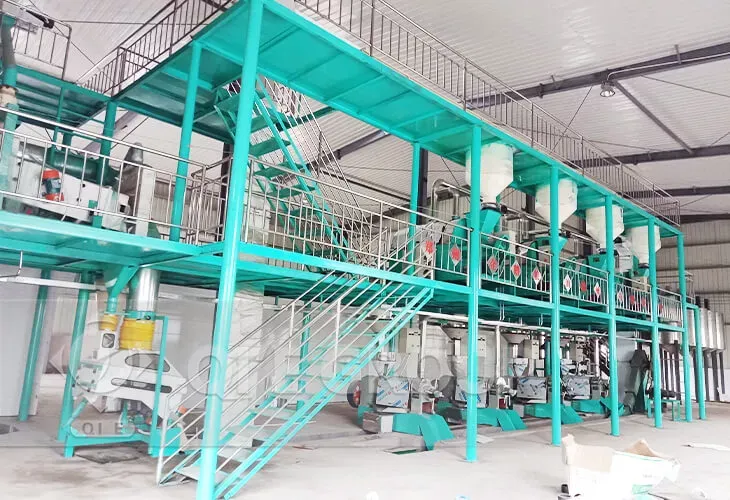
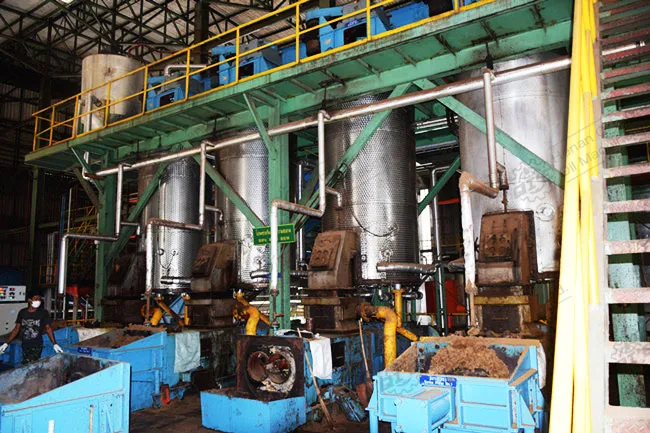
Configuring edible oil refining equipment is not only about selecting machines—it is about matching degumming, deacidification (neutralization), bleaching, and deodorization into a practical process route that fits the incoming crude oil quality, required stability, and target processing efficiency.
This page outlines decision logic and common combinations used in edible oil refinery project design. The content is provided by Qi'e Grain and Oil Machinery Co., Ltd. (企鹅集团), focusing on engineering applicability for planners, technical teams, and procurement decision-makers.
What you will be able to align
In refinery configuration, the four steps below are treated as a logical chain. The actual route may be adjusted depending on crude oil impurities, free fatty acids (FFA), color bodies, odor/volatiles, and the quality requirement of the finished edible oil.
Degumming targets gums (phospholipids) and related impurities that can affect stability and downstream separation. In equipment configuration, this step often influences separator/settling needs and impacts subsequent neutralization/bleaching performance.
Deacidification (commonly via neutralization) is selected when the crude oil has FFA levels that require reduction to meet product specifications and improve stability. Configuration must consider oil loss control, separation efficiency, and compatibility with the upstream degumming quality.
Bleaching helps reduce pigments and certain trace contaminants by adsorption and filtration. In equipment matching, the key is stable dosing, effective mixing/contact time, and reliable filtration so that the deodorization load and final oil appearance are consistent.
Deodorization typically serves as a final step to remove odor-causing volatiles and improve sensory quality. Equipment configuration focuses on stable operation and how upstream pretreatment (degumming/neutralization/bleaching) reduces the deodorizer burden.
In practice, matching edible oil refining equipment is an engineering trade-off. The best configuration is the one that meets product requirements reliably across crude oil variability, while keeping operation and maintenance manageable.
The combinations below are presented as common configuration patterns. Final selection should be confirmed by crude oil characteristics, desired finished oil grade, and the project’s capacity and operational constraints.
| Configuration pattern | Typical purpose | When it is often considered | Key engineering attention points |
|---|---|---|---|
| Degumming → Bleaching → Deodorization | Basic impurity/color control and final odor removal with a simplified route. | When FFA reduction via neutralization is not the dominant need, or is handled by an alternative agreed route. | Stable degumming quality; reliable filtration after bleaching; deodorization stability supported by upstream pretreatment. |
| Degumming → Deacidification → Bleaching → Deodorization | Full conventional refining route balancing quality control and broad applicability. | When crude oil requires structured FFA reduction and consistent finished oil stability/appearance. | Separation efficiency after neutralization; minimizing oil loss; bleaching filtration reliability; upstream-to-deodorizer load coordination. |
| Degumming (enhanced control) → Deacidification (as needed) → Bleaching (tight filtration) → Deodorization | A robustness-focused configuration for variable crude oil and stricter product consistency. | When feedstock quality fluctuates or the project prioritizes stable output across batches and origins. | Instrumentation and sampling points; operator-friendly control; consumables management; maintainability for continuous operation. |
Configuration is best evaluated as a system: changing one step (e.g., degumming quality) will influence the performance requirements of downstream deacidification, bleaching, and deodorization.
As a B2B manufacturer focused on oil pressing equipment, oil production line equipment, and edible oil refining equipment, Qi'e Grain and Oil Machinery Co., Ltd. supports customers with a practical approach to process matching—aligning degumming, deacidification, bleaching, and deodorization with project needs.
If you are planning an edible oil refinery project for Asia, Africa, or South America, share your crude oil type, target capacity, and quality requirements. We can then discuss a suitable edible oil refining equipment configuration and how to match degumming, deacidification, bleaching, and deodorization for stable, operable production.
 361
|
361
|
 Qi'e Grain and Oil Machinery
grain and oil processing machinery
oil pressing equipment
solvent extraction equipment
edible oil refining equipment
43
|
closed-system sesame oil production
export-grade sesame oil processing
sesame oil quality control
automatic sesame oil pressing line
low-temperature sesame oil pressing
303
|
sesame oil production line process
sesame oil processing steps
automatic sesame oil bottling line
sesame oil filtration system
oil press maintenance
345
|
peanut oil production line maintenance
peanut oil equipment preventive maintenance
peanut oil press troubleshooting
production line lubrication management
peanut oil filtration system cleaning
83
|
modular peanut oil production line
small peanut oil plant equipment
integrated peanut oil processing system
energy-saving oil pressing line
peanut oil refining technology
Qi'e Grain and Oil Machinery
grain and oil processing machinery
oil pressing equipment
solvent extraction equipment
edible oil refining equipment
43
|
closed-system sesame oil production
export-grade sesame oil processing
sesame oil quality control
automatic sesame oil pressing line
low-temperature sesame oil pressing
303
|
sesame oil production line process
sesame oil processing steps
automatic sesame oil bottling line
sesame oil filtration system
oil press maintenance
345
|
peanut oil production line maintenance
peanut oil equipment preventive maintenance
peanut oil press troubleshooting
production line lubrication management
peanut oil filtration system cleaning
83
|
modular peanut oil production line
small peanut oil plant equipment
integrated peanut oil processing system
energy-saving oil pressing line
peanut oil refining technology