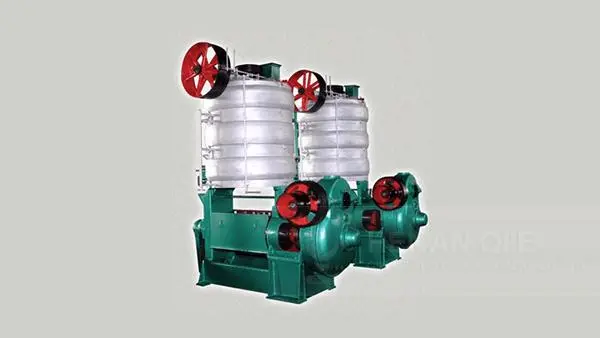
Choosing edible oil processing equipment is easiest when you start from feedstock, target capacity, and refining requirements—then build a line that matches your product goals, automation expectations, and local operating conditions.
As a grain & oil machinery manufacturer, Qi'e Grain and Oil Machinery Co., Ltd. (企鹅集团) supports B2B buyers with a practical selection framework covering pretreatment, pressing or solvent extraction, refining, and engineering/installation. This page also uses our Fully Automatic Soybean Oil Production Line as a concrete reference for configuration decisions.
Note: final configuration depends on your local standards, plant conditions, and product positioning.
Pretreatment prepares soybeans for consistent extraction. Your choices here should reflect incoming material quality and desired production stability.
For soybean projects, pretreatment decisions should be linked to your extraction route (pressing vs solvent extraction) and planned automation level.
The core decision is whether to use mechanical pressing, solvent extraction, or a combined approach. This choice is typically driven by target throughput, desired oil recovery approach, and plant operating conditions.
| Decision point | Pressing line focus | Solvent extraction line focus |
|---|---|---|
| Best-fit scenario | When you prioritize simpler mechanical processing and operational flexibility | When your project planning emphasizes high-throughput extraction routing and integrated downstream handling |
| Key equipment emphasis | Oil pressing equipment, cake handling, filtration/oil clarification interfaces | Extraction system, solvent management, and coordinated safety/environmental controls |
| Automation consideration | Improve consistency with automated control on feeding and press parameters | Often benefits from centralized control and monitoring across multiple linked units |
Practical note: the right route depends on your soybean characteristics, target capacity, and local compliance/environment expectations.
If your product is refined edible soybean oil, your refining configuration should match the required final quality and your operational preferences. Qi'e provides edible oil refining equipment and complete-set refining solutions that can be integrated with your upstream line.
Qi'e’s Fully Automatic Soybean Oil Production Line is designed for buyers seeking a coordinated process from soybean preparation to extraction and refining integration, with a strong emphasis on automation, energy efficiency, and stable product quality.
When comparing oil production line configurations, evaluate automation as a system decision (controls, sensors, interlocks, and operator workflow), not a single machine feature.
To recommend edible oil processing equipment and production line configuration, Qi'e typically confirms the following inputs. Preparing these details helps shorten selection time and improves engineering accuracy.
Beyond equipment supply, Qi'e Grain and Oil Machinery Co., Ltd. provides end-to-end support to help buyers implement an edible oil project with clearer risk control and smoother commissioning.
If you share your feedstock, capacity target, and refining goals, we can propose a practical configuration path for your soybean oil project and discuss delivery scope.
 363
|
363
|
 Qi'e Grain and Oil Machinery Co., Ltd. fully automatic soybean oil production line soybean oil extraction and refining edible oil processing equipment oil production line solution
291
|
palm oil production line automation temperature pressure flow control PLC control logic programming control loop design and PID tuning valve response delay troubleshooting
220
|
Qi'e Grain and Oil Machinery grain and oil machinery turnkey solution edible oil production line oil pressing equipment edible oil refining equipment
492
|
Qi'e Grain and Oil Machinery Co., Ltd. edible oil processing equipment oil pressing equipment vegetable oil solvent extraction equipment edible oil refining equipment
456
|
Qi'e Grain and Oil Machinery Co., Ltd. oil pressing machinery production line complete grain and oil processing system oilseed pretreatment pressing extraction refining turnkey edible oil equipment
Qi'e Grain and Oil Machinery Co., Ltd. fully automatic soybean oil production line soybean oil extraction and refining edible oil processing equipment oil production line solution
291
|
palm oil production line automation temperature pressure flow control PLC control logic programming control loop design and PID tuning valve response delay troubleshooting
220
|
Qi'e Grain and Oil Machinery grain and oil machinery turnkey solution edible oil production line oil pressing equipment edible oil refining equipment
492
|
Qi'e Grain and Oil Machinery Co., Ltd. edible oil processing equipment oil pressing equipment vegetable oil solvent extraction equipment edible oil refining equipment
456
|
Qi'e Grain and Oil Machinery Co., Ltd. oil pressing machinery production line complete grain and oil processing system oilseed pretreatment pressing extraction refining turnkey edible oil equipment