QIE Group | Technical Field Note for B2B Oil Processors
In peanut oil refining, the difference between “acceptable” and “high-performing” plants is rarely one big upgrade—it is usually the day-to-day discipline of temperature control, vacuum/pressure stability, and repeatable operating windows across pre-treatment, pressing, filtration, and refining. This article maps the critical control points (CCPs) where temperature and pressure directly impact oil yield, impurity removal efficiency, oxidative stability, and compliance with ISO 22000 and HACCP expectations.
Peanut oil yield is not only “how much oil is inside the seed,” but how effectively the plant releases, separates, and retains that oil through each step. Temperature changes viscosity and cell rupture behavior; pressure/vacuum controls mass transfer, flashing of volatiles, and the separation boundary between oil and impurities. In practice, instability creates three silent losses:
For B2B operators selling into food manufacturers, a “high-yield” line is ultimately a “repeatable” line—supported by sensors, PID logic, and verifiable records aligned with HACCP monitoring.
| Stage | Primary Objective | Temperature/Pressure Lever | Typical KPI |
|---|---|---|---|
| Cleaning & grading | Reduce non-oil load, protect equipment | No high heat; stable airflow/negative pressure in aspiration | Foreign matter <0.5% |
| Crushing/flaking | Increase surface area, prep for heat transfer | Controlled friction heat; avoid hot spots | Uniform flake thickness |
| Roasting/conditioning | Cell rupture, viscosity reduction | T stability, residence time, moisture window | Cake oil %; aroma consistency |
| Pressing | Max oil expression | Press temperature + mechanical pressure profile | Cake residual oil 6–10% (typical target) |
| Filtration/clarification | Remove fines, prevent downstream fouling | ΔP across filter; oil temperature for viscosity | Turbidity; filter cycle time |
| Refining (degum/neutralize/bleach/deodorize) | Purity, color, odor, stability | Vacuum level + thermal exposure control | FFA, PV, color, contaminants |
The highest leverage points for yield are conditioning/roasting, pressing stability, and centrifuge separation efficiency—each sensitive to temperature and pressure in different ways.
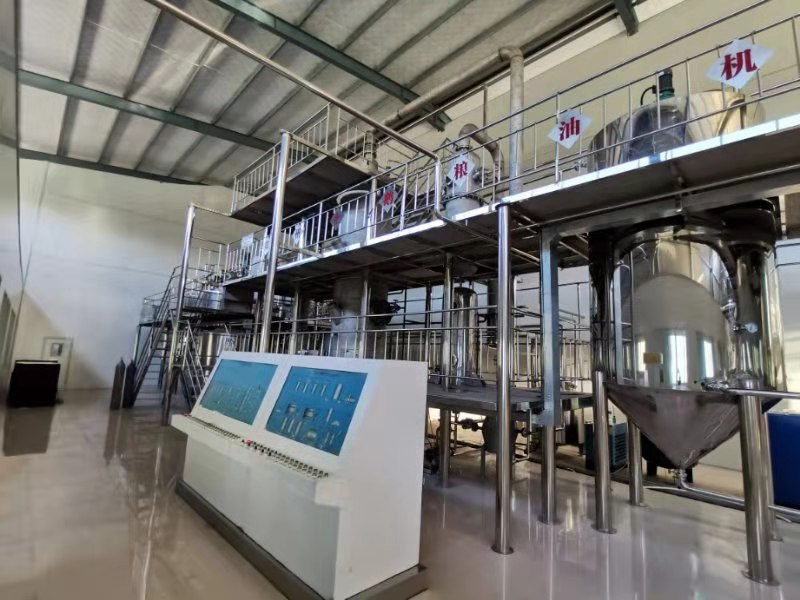
Yield problems often begin with inconsistent incoming peanuts. Mixing lots with different moisture and maturity forces operators to chase temperature setpoints and creates uneven roasting. In a controlled plant, pre-treatment is treated like a measurable input to the thermal system.
For mechanical pressing, kernel moisture is commonly conditioned to 3–6%. Too dry increases powdering and fines (more oil loss into foot); too wet reduces expression efficiency and destabilizes press torque. Best practice is to measure moisture per lot (nearline), then use controlled drying/tempering rather than “feel-based” adjustments.
Although not “hot,” aspiration systems depend on stable negative pressure. When airflow fluctuates, dust and light impurities pass downstream, increasing bleaching earth load later. Many ISO 22000 audits also expect traceable records for foreign matter control, magnet checks, and sieve integrity—these reduce unplanned stops that often drive operators to overheat equipment to catch up.
Conditioning (often called roasting in peanut oil lines) is where temperature control delivers a double win: improved oil release and reduced downstream refining load. The goal is to rupture cell structure, reduce oil viscosity, and create a press-friendly plasticity—without scorching proteins or accelerating oxidation.
Many lines operate with a staged profile (example): pre-heat zone 90–110°C, main conditioning 120–160°C with short residence time (often 15–35 min depending on cooker design), then controlled discharge to minimize hot spots. Uniformity matters more than peak temperature.
A ±8–12°C swing can translate into non-uniform viscosity at the press inlet. Operators compensate by tightening choke settings, increasing cake density—often raising residual oil in cake by 0.8–1.6% and driving more fines into crude oil.
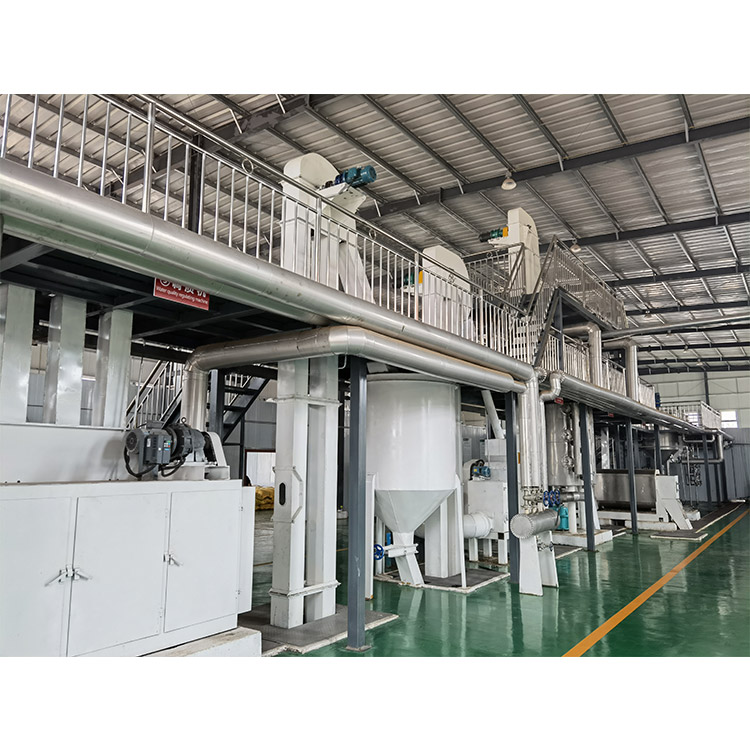
In screw pressing, “pressure” is not a single value; it is a profile created by screw geometry, choke resistance, feed rate, and material plasticity. Temperature, in turn, drives viscosity and friction behavior. The best-performing plants treat pressing like a controlled system, not a mechanical black box.
For many peanut pressing lines, maintaining press barrel/product temperature around 90–120°C improves flow and expression while limiting thermal damage. If temperature climbs uncontrolled (e.g., >130°C sustained), crude oil may show darker color and higher refining load; if too low (e.g., <80°C), viscosity increases and oil remains trapped.
| Signal | Why it matters | Action when drifting |
|---|---|---|
| Motor current/torque trend | Proxy for pressure profile and material resistance | Adjust feed rate, choke, or conditioner discharge temp first |
| Cake residual oil % | Direct yield metric; reveals hidden losses | Re-tune thermal window; check worn screw/cage clearance |
| Crude oil solids (ppm) | Fines increase oil loss in foot and overload filters | Reduce over-dry feed; stabilize press temperature and choke |
| Press outlet oil temperature | Indicates friction heat and thermal stress | Improve cooling/jacket control; avoid “run hot to compensate” |
Plants that implement closed-loop control on feed rate and temperature (with alarms for torque drift) often report steadier cake oil levels and fewer quality deviations. In B2B supply chains, that consistency becomes a sales asset: customers feel safer qualifying a supplier with tight batch-to-batch variability.
Filtration looks like a purity step, but it can become a yield sink when oil viscosity is high or differential pressure (ΔP) is unmanaged. Excess fines create thicker cakes on filter media, trapping oil; overly aggressive filtration increases cycle frequency and increases handling losses.
For HACCP documentation, filtration monitoring records (ΔP trend, changeover timing, and filter integrity checks) provide traceability that buyers increasingly request—especially when peanut oil is used in snacks, sauces, and ready-to-eat foods.
Refining can either preserve oil value—or quietly convert it into loss via excessive soapstock, higher bleaching earth consumption, and unnecessary thermal exposure. The most sensitive step is deodorization: it relies on high temperature and deep vacuum, and small deviations can affect flavor, contaminants, and oxidative stability.
Entrained oil in gums/soapstock is a common yield leak. Stabilizing reaction temperature (often 60–75°C for phosphoric/citric-assisted systems) and controlling mixing energy helps form separable phases for centrifuges. Many plants see measurable improvement when centrifugal feed temperature is held within ±2°C, reducing emulsion formation and improving split.
Typical bleaching occurs around 90–110°C under vacuum (commonly 30–80 mbar, system-dependent) to minimize oxygen exposure. Overheating increases oil loss in spent earth and can raise downstream deodorization burden. A practical KPI is spent earth oil retention—tight process control often keeps it notably lower than uncontrolled batches.
In many edible oil plants, deodorization runs around 220–240°C under deep vacuum of roughly 2–6 mbar. The vacuum level directly affects stripping efficiency, residence time requirements, and thermal stress. When vacuum degrades (e.g., leaking, overloaded ejectors, fouled condensers), operators often increase temperature or time, which can:
The most practical approach is not to avoid heat—refining requires it—but to minimize exposure time at peak temperatures and keep oxygen out via stable vacuum and inert conditions where feasible. Many plants also monitor parameters like peroxide value (PV) and anisidine value (AnV) trendlines to ensure process changes improve yield without degrading stability.
In a mid-size peanut oil facility upgrading from manual adjustments to basic automation (temperature transmitters, vacuum transmitters, PID control loops, and digital batch logging), a common improvement pattern looks like this:
| Metric | Before (Manual / High Variance) | After (Stabilized Control) | Typical Value |
|---|---|---|---|
| Conditioner discharge temp swing | ±10–12°C | ±2–3°C | Improved press feed stability |
| Cake residual oil | 9.5–11.0% | 7.5–9.0% | Yield gain often +1.5% to +3.0% |
| Refining loss (soapstock/foot) | Higher, inconsistent | Lower, repeatable | Reduced emulsion events |
| Nonconformity events | Frequent adjustments per shift | Alarm-based corrections | Stronger ISO 22000 audit trail |
The commercial impact is straightforward: higher yield reduces unit cost, better purity reduces complaint risk, and consistent documentation improves customer qualification speed—especially for international B2B buyers who demand traceable process control.
A strong temperature/pressure strategy is incomplete without instrumentation and records. For ISO 22000 and HACCP-aligned operations, auditors and customers typically look for evidence that critical parameters are monitored, limits are defined, and deviations trigger corrective actions.
Better control usually means fewer reworks, less bleaching earth consumption, and reduced energy waste from overheating and unstable vacuum systems. These are measurable improvements many multinational buyers now ask about during supplier assessments—often under ESG or responsible sourcing checklists.
International buyers rarely ask only “What is your capacity?” They ask questions that reveal whether the supplier can deliver stable quality at scale:
When these answers are clear, qualification cycles shorten, complaint rates fall, and long-term contracts become easier to defend.
QIE Group helps B2B processors reduce cake oil loss, improve impurity removal efficiency, and build audit-ready records through automated pressing systems and temperature/vacuum control integration—designed for repeatable output and sustainable operations.
Explore QIE Group’s automated peanut oil pressing & refining solutionsTypical next step: share target capacity, peanut variety, current cake oil %, and refining configuration to receive a control-point recommendation list.
Verify moisture range; log discharge temperature every lot; investigate swings >±3°C; keep feed rate stable.
Trend motor current; sample cake oil routinely; align press temperature with conditioner output; avoid compensating with “more choke.”
Hold filtration temperature for viscosity; set ΔP alarms; review filter cycle time vs. solids trend to prevent oil trapping.
Treat vacuum level as a CCP; perform leak checks; avoid extending time/temperature to compensate for poor vacuum.
 398
|
398
|
 cold-heat dual-mode pressing
hydraulic pre-press oil machine
oilseed pressing optimization
improve oil yield
industrial hydraulic oil press
456
|
energy-saving sesame oil extraction equipment
closed-system sesame oil production line
automated sesame oil processing system
heat recovery and temperature control for oil extraction
modular sesame oil extraction line configuration
306
|
peanut oil production line maintenance
screw press maintenance
filtration system maintenance
equipment lubrication management
peanut oil equipment troubleshooting
320
|
closed sesame oil production system
sesame oil purity improvement
sesame oil contamination control
sesame oil filtration technology
international food safety compliance
300
|
rice bran oil refining equipment
core component material selection
corrosion resistant stainless steel for edible oil plants
automated rice bran oil refinery line
edible oil equipment after sales service
cold-heat dual-mode pressing
hydraulic pre-press oil machine
oilseed pressing optimization
improve oil yield
industrial hydraulic oil press
456
|
energy-saving sesame oil extraction equipment
closed-system sesame oil production line
automated sesame oil processing system
heat recovery and temperature control for oil extraction
modular sesame oil extraction line configuration
306
|
peanut oil production line maintenance
screw press maintenance
filtration system maintenance
equipment lubrication management
peanut oil equipment troubleshooting
320
|
closed sesame oil production system
sesame oil purity improvement
sesame oil contamination control
sesame oil filtration technology
international food safety compliance
300
|
rice bran oil refining equipment
core component material selection
corrosion resistant stainless steel for edible oil plants
automated rice bran oil refinery line
edible oil equipment after sales service