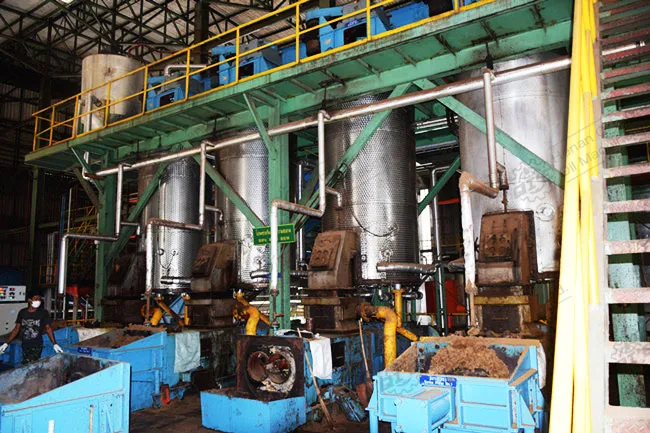
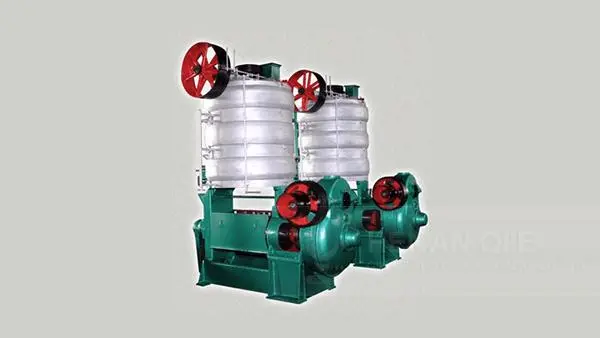
Choosing between pressing and solvent extraction is one of the most important decisions when planning an edible oil plant. The right method affects oil yield, product positioning, environmental compliance, safety management, and the full equipment configuration—from pretreatment to refining.
As a B2B manufacturer and solution provider, Qi'e Grain and Oil Machinery Co., Ltd. supports investors and operators with oil pressing equipment, vegetable oil solvent extraction systems, complete oil production lines, and edible oil refining equipment—helping you align process selection with raw materials, capacity, and market targets.
Pressing uses mechanical force to expel oil from prepared oilseeds. It is typically valued for simpler operation and a clear “mechanical” processing logic.
Solvent extraction uses food-industry-approved solvents in a closed-loop system to dissolve oil from prepared material (often flakes or pressed cake), then recovers the solvent through distillation/stripping.
| Dimension | Pressing | Solvent Extraction |
|---|---|---|
| Suitable oilseeds | Common for many seeds and nuts; selection depends on oil content, hardness, and product positioning (e.g., cold-pressed lines). | Often chosen where high recovery is important; widely used for many bulk oilseeds in continuous industrial processing. |
| Oil yield / recovery | Yield depends strongly on pretreatment (cleaning, dehulling if needed, flaking, cooking) and press configuration; residual oil in cake may be higher. | Designed to recover more oil from prepared material (including press cake), typically reducing residual oil when operated correctly. |
| Equipment composition | Pretreatment + cold/hot press oil machine + filtration; may be followed by refining depending on product grade targets. | Pretreatment (often flaking) + vegetable oil solvent extractor + desolventizing/toasting + solvent recovery + oil clarification; refining commonly follows. |
| Production continuity | Can be configured as batch or semi-continuous depending on capacity and line design. | Typically configured as a continuous process for stable throughput at industrial scale. |
| Solvent management | No solvent loop; management focuses on mechanical safety, temperature control (especially for hot pressing), and hygiene. | Requires closed-loop solvent handling, vapor control, leak prevention, monitoring, and compliance-ready plant layout and operating discipline. |
| Energy & process control | Energy use relates to cooking/conditioning (if used), press drive, and filtration; key is stable feed preparation and press parameters. | Energy and control focus on solvent recovery, temperature/pressure stability, and safe ventilation/condensation design within the extraction system. |
| Product positioning | Often selected for differentiated positioning (e.g., “pressed oil” lines) and simplified process expectations; refining can be added to meet edible standards. | Often selected for cost-per-ton optimization and bulk edible oil supply; refining is typically part of the overall plan to reach target specifications. |
Note: Actual results depend on raw material characteristics, pretreatment quality, equipment configuration, and operating parameters. A process comparison should be done using your specific oilseed type, capacity target, local safety/environmental requirements, and product grade goals.
Many plants use pre-pressing + solvent extraction to balance mechanical simplicity with higher recovery:
Whether you choose pressing or solvent extraction, crude oil usually needs an appropriate refining route to meet your target market requirements. Qi'e Grain and Oil Machinery Co., Ltd. can configure edible oil refining equipment as part of a complete line—so the upstream extraction method and downstream refining capacity match without bottlenecks.
With a product portfolio covering oil pressing equipment, vegetable oil solvent extractor systems, oil production line equipment, and edible oil refining equipment, Qi'e Grain and Oil Machinery Co., Ltd. helps you compare options using your real constraints and goals—raw material, capacity, target quality, investment scale, and compliance requirements.
For international projects across Asia, Africa, and South America, process clarity and compliance-ready design are key. A well-matched pressing or extraction configuration reduces operational friction and supports stable, long-term plant performance.
If you are evaluating pressing vs solvent extraction, we can help you map your raw materials and target output to a practical equipment configuration—covering cold press or hot press oil machines, solvent extraction sections, and downstream refining integration.
Share your oilseed type, desired capacity, and target oil grade requirements, and Qi'e Grain and Oil Machinery Co., Ltd. will respond with a process recommendation framework and a line configuration direction suitable for your project.
 169
|
169
|
 Qi'e Grain and Oil Machinery Co., Ltd.
edible oil production line project
equipment installation and commissioning
overseas oil mill project delivery
after-sales technical service for oil machinery
86
|
modular peanut oil production line
small peanut oil plant equipment
integrated peanut oil processing system
energy-saving oil pressing line
peanut oil refining technology
92
|
Qi'e Grain and Oil Machinery Co., Ltd.
overseas edible oil processing project case
complete oil processing equipment
commissioning and start-up
quality control in edible oil production
62
|
Qi'e Grain and Oil Machinery Co., Ltd.
edible oil production line
process flow
equipment configuration
edible oil refining
228
|
Qi'e Grain and Oil Machinery Co., Ltd.
edible oil production line
oil processing flow
equipment configuration
refining and filling
Qi'e Grain and Oil Machinery Co., Ltd.
edible oil production line project
equipment installation and commissioning
overseas oil mill project delivery
after-sales technical service for oil machinery
86
|
modular peanut oil production line
small peanut oil plant equipment
integrated peanut oil processing system
energy-saving oil pressing line
peanut oil refining technology
92
|
Qi'e Grain and Oil Machinery Co., Ltd.
overseas edible oil processing project case
complete oil processing equipment
commissioning and start-up
quality control in edible oil production
62
|
Qi'e Grain and Oil Machinery Co., Ltd.
edible oil production line
process flow
equipment configuration
edible oil refining
228
|
Qi'e Grain and Oil Machinery Co., Ltd.
edible oil production line
oil processing flow
equipment configuration
refining and filling