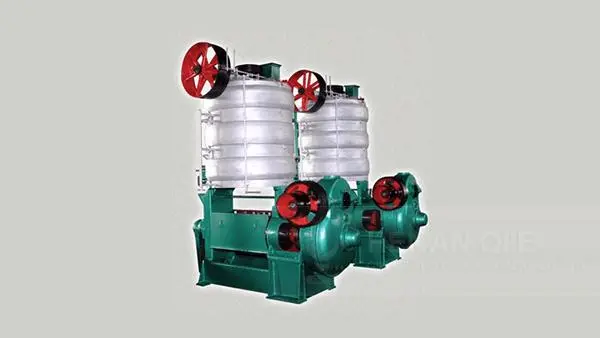
In a refined peanut oil production line, the pre-filling filtration stage is the last “quality gate” before bottling. Done correctly, it helps remove residual fine particles and suspended solids that may remain after pressing/primary filtration and refining—supporting stable, clear bottling and consistent finished-oil appearance.
Engineering note from Qi'e Grain and Oil Machinery (企鹅集团): filtration performance depends on raw material quality, refining outcomes, oil temperature/viscosity, and downstream filling conditions. Micron rating, capacity, and differential pressure (DP) limits should be validated by oil testing, applicable regulations, and your project technical documents.
A typical Refined Peanut Oil Production Line includes raw material pre-treatment, pressing, filtration, refining, and then filling/packaging. Pre-filling filtration is installed after refining and before the filler to polish the oil and protect filling valves and nozzles.
Typical connection logic (simplified):
Selection should begin with food-contact compliance and hygiene design. In edible oil applications, the filter media and sealing materials must be suitable for the operating temperature and compatible with oil.
Practical reminder: “Food-grade” is not a micron rating. Treat compliance documentation and material compatibility as a separate, mandatory checklist before discussing filtration precision.
In pre-filling filtration for refined peanut oil, the most common engineering options are bag filters and cartridge filters. The best choice depends on impurity load, target clarity, maintenance strategy, and throughput stability.
| Item | Bag Filter | Cartridge Filter |
|---|---|---|
| Operating concept | Single or multi-bag housing; oil passes through replaceable bag media | One or multiple cartridges; finer structure for polishing filtration |
| Typical role | Pre-polish / higher dirt load tolerance | Final polish / clarity-focused stage |
| Maintenance | Simple bag change; good for fast turnaround | Cartridge change; can be more frequent if micron is very fine |
| Selection emphasis | Capacity matching, bag size, acceptable DP rise | Micron rating, DP control, stable flow to filler |
| Best fit scenarios | When residual solids load is uncertain or relatively higher | When clarity requirements are strict and upstream process is stable |
Many projects adopt a practical two-step approach: a coarser stage (often bag) to protect the final filter, followed by a fine polishing stage (often cartridge) right before the filler—subject to your line layout and QA requirements.
For pre-filling filtration, micron rating is only useful when considered together with flow capacity, oil temperature/viscosity, and differential pressure (DP). A finer micron rating can improve polishing, but it may also increase DP rise and shorten replacement cycles.
A refined peanut oil line is only as stable as its bottling section. Pre-filling filtration should be sized so that normal operation stays within a controllable DP range and supports your planned flow rate without frequent stoppages.
For long-term clarity and predictable operating cost, focus on monitoring and standard maintenance routines—not only the initial micron choice.
Automation and alarm functions (DP transmitter, flowmeter, interlocks) depend on project configuration and budget. In engineering practice, we recommend confirming instrument selection and alarm logic during the technical design phase.
When specifying pre-filling filtration for a refined peanut oil production line, these inputs help Qi'e Grain and Oil Machinery’s engineering team recommend a suitable bag/cartridge configuration and maintenance approach:
Qi'e Grain and Oil Machinery (企鹅集团) supplies oil pressing equipment, oil production line equipment, and oil refining equipment for B2B customers. For refined peanut oil projects, we can align the pre-filling filtration stage with upstream pressing/filtration and refining, and with downstream filling—helping you build a filtration setup that is practical to operate and maintain.
Share your target throughput, oil temperature, and finished-oil clarity requirements, and we will support technical selection for filter media, micron rating, capacity matching, and DP/flow monitoring based on your project documents and verification testing.
 260
|
260
|
 Qi'e Grain and Oil Machinery fully automatic soybean oil production line grain and oil machinery equipment solution soybean oil processing plant edible oil refining equipment
72
|
Qi'e Grain and Oil Machinery Co., Ltd. edible oil production line process flow equipment configuration edible oil refining
208
|
Qi'e Grain and Oil Machinery Co., Ltd. solution competition oilseed machinery industry trends equipment and technical service turnkey oil production line solutions
136
|
Qi'e Grain and Oil Machinery Co., Ltd. refined peanut oil production line filtration automated filtration system for peanut oil filtration accuracy vs capacity peanut oil filter maintenance
104
|
Qi'e Grain and Oil Machinery Co., Ltd. grain and oil machinery equipment oil pressing equipment oil production line equipment edible oil refining equipment
Qi'e Grain and Oil Machinery fully automatic soybean oil production line grain and oil machinery equipment solution soybean oil processing plant edible oil refining equipment
72
|
Qi'e Grain and Oil Machinery Co., Ltd. edible oil production line process flow equipment configuration edible oil refining
208
|
Qi'e Grain and Oil Machinery Co., Ltd. solution competition oilseed machinery industry trends equipment and technical service turnkey oil production line solutions
136
|
Qi'e Grain and Oil Machinery Co., Ltd. refined peanut oil production line filtration automated filtration system for peanut oil filtration accuracy vs capacity peanut oil filter maintenance
104
|
Qi'e Grain and Oil Machinery Co., Ltd. grain and oil machinery equipment oil pressing equipment oil production line equipment edible oil refining equipment