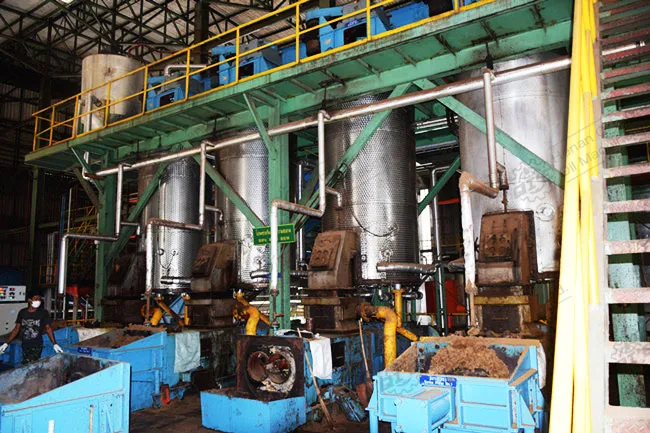
In a refined peanut oil production line, the transition from refining (deacidification, decolorization, deodorization) to automatic filling/bottling is where stable product quality meets stable line rhythm. This page explains practical coordination points—oil condition control, precise metering, capacity matching, buffer tanks, and line-level monitoring—for edible oil plant production managers and process engineers.
Brand reference: Qi'e Grain and Oil Machinery (Qi'e Grain and Oil Machinery Co., Ltd.) provides integrated equipment for peanut oil extraction, refining, filtration, and automated filling within a compact, automation-friendly line design—without assuming a fixed control feature set or guaranteeing a specific filling accuracy.
Refining aims to improve peanut oil usability and safety for downstream packaging by reducing undesirable components and stabilizing appearance and odor. Automatic filling, meanwhile, demands repeatable flow, stable viscosity, and consistent filtration performance. If oil properties fluctuate, the filler may experience drifting fill volumes, foaming, nozzle dripping, unstable back-pressure, or frequent micro-stops.
In a typical refined peanut oil line, deacidification, decolorization, and deodorization influence oil behavior at the filler through changes in composition, clarity, and volatility. The goal is not just “refined oil,” but refined oil that fills consistently.
| Refining stage | What it changes (engineering view) | Common downstream effect on filling | Coordination checkpoints |
|---|---|---|---|
| Deacidification | Reduces free fatty acids and related unstable fractions; can affect soapstock carryover risk depending on method and separation. | Better stability and clarity; poor separation may increase haze/fines affecting filters and valves. | Clarification/centrifugation performance; final polishing filtration capacity; trending of clarity/haze. |
| Decolorization | Adsorption removes pigments and some polar impurities; filtration quality is critical after bleaching. | Stable color reduces rework; inadequate filtration can send fines to the filler and cause metering drift. | Filter differential pressure monitoring; filter aid/consumable management; defined “ready-to-fill” clarity criteria. |
| Deodorization | Removes volatiles; involves heat and vacuum; impacts dissolved gases and foaming propensity. | More consistent odor profile; temperature/vacuum fluctuations may cause variable foam/air release during filling. | Discharge temperature control; degassing/buffer strategy; stable oil delivery pressure to filler. |
Process boundary reminder: Refining improves oil condition; filling converts oil condition into package consistency. The coordination target is repeatability—oil temperature, cleanliness, and supply rhythm should be controlled so the filler can operate within its stable range.
Define a realistic oil temperature window at filler inlet and keep it stable through heat exchange strategy, insulated piping, and controlled recirculation. Stable temperature supports stable viscosity, which supports stable metering—especially in continuous high-speed filling.
Set a “ready-to-fill” filtration standard and monitor filter differential pressure and changeover timing. Consistent filtration helps protect filling valves/nozzles and keeps fill-to-fill variation under control.
Avoid oscillating inlet pressure from pumps or frequent valve actions. Use proper pump selection, speed control strategy, and buffers (hydraulic/volume) to reduce pulsation so the filler sees a steady feed condition.
If foaming or air release is observed at filling, review deodorization discharge conditions, transfer piping, and tank design. The objective is a calm, air-minimized oil stream at the filler to support stable level detection and consistent headspace.
A refined peanut oil production line runs smoothly only when refining output and filling consumption are balanced. If refining is intermittent while filling is continuous, or vice versa, the line will rely heavily on buffers and may see frequent stops, product temperature drift, or re-circulation losses.
| Mismatch scenario | What you may observe | Engineering adjustment direction |
|---|---|---|
| Refining < Filling | Filler starvation, frequent stops, unstable fill levels, temperature drift as oil supply becomes discontinuous. | Increase buffer capacity; review refining shift plan; optimize refining cycle time; reduce filler speed or add parallel supply strategy. |
| Refining > Filling | Tank levels rise, more re-circulation, longer residence time, potential temperature management challenges. | Add intermediate storage planning; align packaging schedule; consider multi-format filling plans; define maximum residence time policy. |
| Frequent product/pack changes | More cleaning, more transitions, increased off-spec risk during start/stop. | Use buffer tanks to decouple; define changeover SOP; enhance line monitoring and interlocks for safe transitions. |
Buffer tanks help maintain continuous filling even when upstream refining experiences normal fluctuations (filter changeover, batch transitions, short maintenance). For refined peanut oil, tank design should prioritize stable temperature, low air entrainment, and cleanability.
Good practice: Treat the buffer tank as part of the “filling condition control loop.” If tank temperature stratifies or entrains air during transfer, metering stability can degrade even when refining parameters are acceptable.
For B2B engineering selection, it helps to define what should be monitored at the line level and how abnormal conditions should protect product and equipment. Exact control implementation depends on the chosen automation scope, but the monitoring framework below is widely applicable.
Interlocks should be defined to prevent off-condition oil from entering packaging and to protect the line from dry-running or overpressure.
Note: Specific logic and permissives should be finalized during engineering design and commissioning based on your plant standards and selected equipment configuration.
When selecting or upgrading a refined peanut oil production line with automatic bottling, the following questions help clarify functional boundaries among refining equipment, filling equipment, and the overall line control.
As an edible oil machinery supplier, Qi'e Grain and Oil Machinery provides equipment and engineering-oriented support across the peanut oil workflow—from raw material preparation and oil extraction to peanut oil refining, final filtration, and automatic filling integration. For projects serving Asia, Africa, and South America markets, we typically align on practical factors such as utilities, operator skill level, maintenance access, and spare parts planning.
If you share your target capacity, oil quality targets, bottle sizes, and shift plan, we can help you review whether your refining section, buffer/storage, and filler section are properly matched—focusing on stable operation rather than unrealistic performance promises.
 377
|
377
|
 Qi'e Grain and Oil Machinery grain and oil processing equipment selection oil pressing machine edible oil production line edible oil refining equipment
122
|
Qi'e Grain and Oil Machinery Co., Ltd. edible oil production line project preparation checklist plant layout planning installation and commissioning service
492
|
Qi'e Grain and Oil Machinery Co., Ltd. edible oil processing equipment oil pressing equipment vegetable oil solvent extraction equipment edible oil refining equipment
208
|
Qi'e Grain and Oil Machinery Co., Ltd. solution competition oilseed machinery industry trends equipment and technical service turnkey oil production line solutions
64
|
Qi'e Grain and Oil Machinery Co., Ltd. edible oil refining equipment degumming process deacidification process bleaching and deodorization
Qi'e Grain and Oil Machinery grain and oil processing equipment selection oil pressing machine edible oil production line edible oil refining equipment
122
|
Qi'e Grain and Oil Machinery Co., Ltd. edible oil production line project preparation checklist plant layout planning installation and commissioning service
492
|
Qi'e Grain and Oil Machinery Co., Ltd. edible oil processing equipment oil pressing equipment vegetable oil solvent extraction equipment edible oil refining equipment
208
|
Qi'e Grain and Oil Machinery Co., Ltd. solution competition oilseed machinery industry trends equipment and technical service turnkey oil production line solutions
64
|
Qi'e Grain and Oil Machinery Co., Ltd. edible oil refining equipment degumming process deacidification process bleaching and deodorization