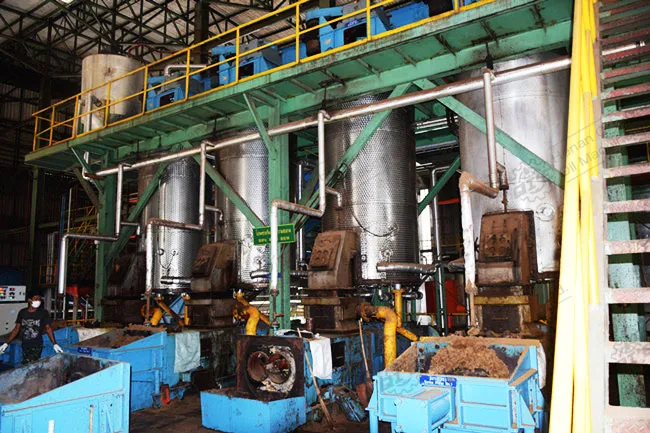
In rice bran oil refining, “deacidification” and “decolorization” are not isolated steps—they are tightly coupled quality gates that decide whether the final oil can achieve stable color, clean flavor, longer shelf life, and consistent downstream performance. Modern high-efficiency deacidification equipment is increasingly selected not only for higher free fatty acid (FFA) removal, but also for how it improves bleaching outcomes, reduces oil loss, and supports greener production at scale.
Rice bran oil typically contains higher levels of FFA due to enzymatic activity (lipase) after milling and during bran storage/transport. When FFA remains high, it does more than affect acidity: it accelerates oxidation, consumes bleaching earth capacity, and increases the risk of unstable color after deodorization.
In practice, many refineries target FFA ≤ 0.10–0.20% before final polishing/deodorization for consistent edible-grade stability. High-efficiency systems are designed to reach this range more reliably—especially under fluctuating crude oil quality—while keeping neutral oil loss and energy load under control.
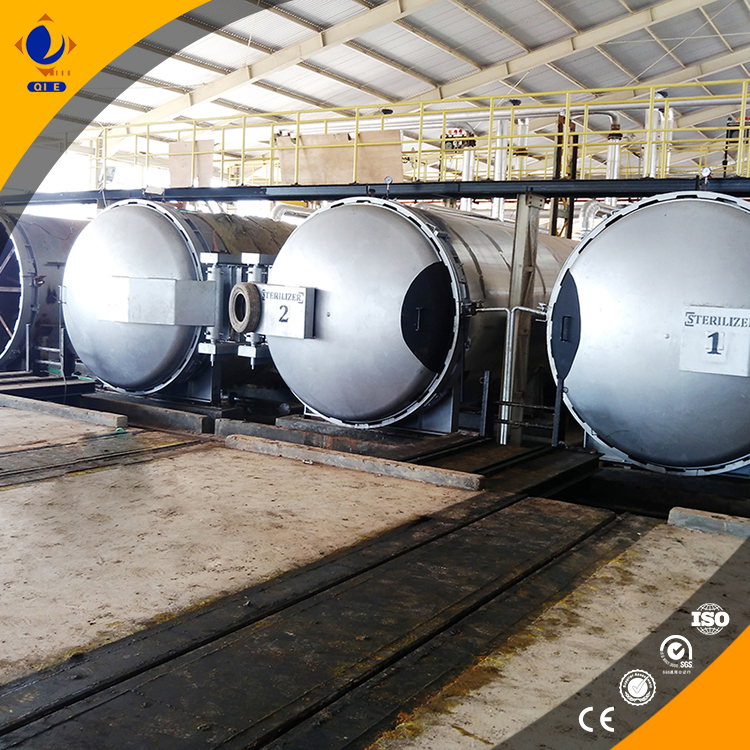
Whether the plant uses physical deacidification (steam stripping) or chemical neutralization (alkali refining), the real determinant of performance is mass transfer efficiency: contact area, residence time distribution, vacuum stability, and temperature control. High-efficiency designs typically integrate enhanced mixing/dispersion geometry, short dead-zones, and stable vacuum & condensate handling to keep the process in its optimal window.
Cleaner deacidified oil reduces the load on bleaching earth and carbon, improves adsorption efficiency, and lowers the probability of color reversion. Well-controlled upstream deacidification also tends to reduce soap traces (in chemical routes) and stabilizes moisture/volatiles—both important for bleaching filtration behavior and deodorization stability.
Consistent FFA endpoints and color targets are difficult to maintain with manual adjustments alone. Advanced systems commonly support closed-loop control for vacuum, steam rate, temperature ramps, dosing, and differential pressure alarms—reducing batch-to-batch variation and avoiding over-treatment that causes unnecessary oil loss.
Crude Rice Bran Oil → Pre-filtration / Degumming → High-Efficiency Deacidification → Washing & Drying (if chemical route) → Bleaching (Decolorization) → Filtration → Deodorization → Polishing / Final Filtration → Finished Oil
The key is not adding steps, but removing variability: stable vacuum, controlled thermal exposure, and predictable residence time keep both acidity and color within narrow targets.
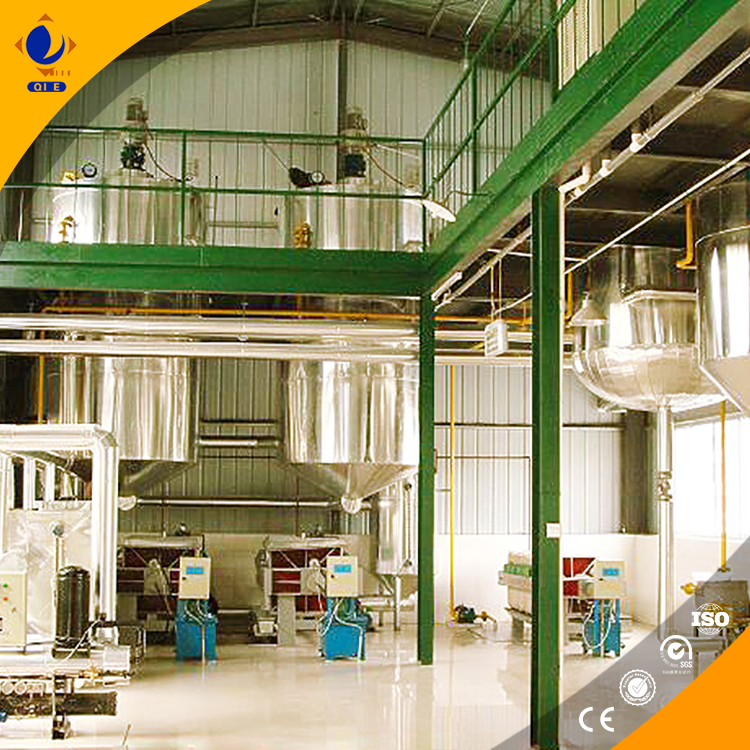
Actual results depend on crude oil quality, degumming effectiveness, operating discipline, and adsorbent selection. Still, procurement teams often request realistic benchmark ranges to compare equipment concepts and automation levels. The table below provides industry-typical reference ranges for rice bran oil lines (medium scale), useful for initial screening.
| Parameter | Conventional Deacidification Setup | High-Efficiency Deacidification Equipment | What It Means for Bleaching & Quality |
|---|---|---|---|
| FFA after deacidification | 0.20–0.40% | 0.08–0.20% | Lower bleaching load, less oxidation risk, more stable deodorized oil |
| Neutral oil loss (total) | 1.0–1.8% | 0.6–1.2% | Higher yield and better refining margin |
| Bleaching earth dosage (typical) | 0.8–1.2% | 0.5–0.9% | Lower consumables cost and less spent earth disposal |
| Color after bleaching (Lovibond, 5¼") | Y 20–35 / R 2.0–3.5 | Y 12–25 / R 1.2–2.5 | Easier to reach final color targets with less reversion |
| Specific energy (deacidification + heating) | 85–120 kWh/ton (incl. utilities equivalent) | 65–95 kWh/ton | Lower utility spend and easier ESG reporting |
| Automation level | Semi-manual, limited interlocks | Recipe control + alarms + trend logging | Less quality drift; easier training and stable output |
Benchmark note: “High-efficiency” is achieved by a combination of mechanical design, heat integration, vacuum stability, and control logic—not by one single component.
For rice bran oil plants pursuing a green, energy-saving refining line, the most bankable sustainability wins are typically operational: less rework, lower adsorbent consumption, improved heat recovery, and fewer off-spec batches. High-efficiency deacidification equipment often supports these outcomes through tighter process windows and better integration with bleaching and deodorization.
Total cost of ownership is strongly shaped by ease of cleaning, stability of vacuum systems, and filtration behavior after bleaching. When evaluating rice bran oil deacidification and decolorization equipment, teams typically benefit from confirming practical details rather than only nameplate specs:
Manways, drain points, CIP compatibility, and how quickly the unit returns to stable vacuum after restart.
Vacuum transmitters, temperature sensors, steam control valves, and trend logging—especially during crude quality swings.
Stable deacidification improves bleaching filtration; verify expected differential pressure range and cake release characteristics.
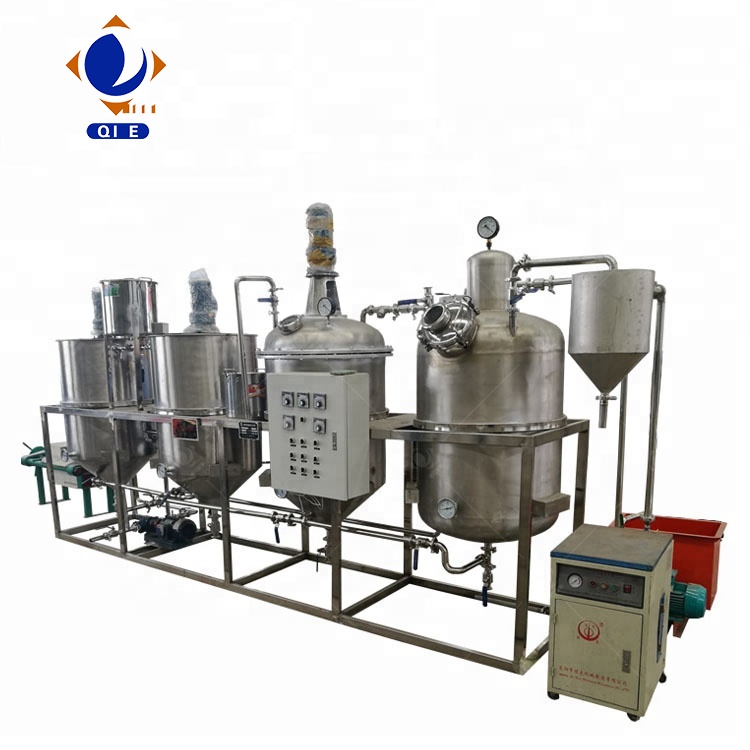
The industry trend is clear: buyers increasingly audit not just product specs, but process credibility—traceable parameters, stable quality under crude variation, and environmental performance that can be documented. This is where equipment with robust automation and heat integration becomes a strategic asset.
Within this context, 企鹅集团 (Penguin Group) positions its engineering approach around controllability and practical uptime, aiming to help refiners convert “process stability” into market stability: fewer customer complaints, fewer returns due to haze or color drift, and more predictable supply contracts.
“When FFA control became more stable, bleaching stopped being a ‘guessing game’. Earth dosage dropped, filtration became predictable, and the final oil color held steady across multiple crude lots.”
— Refinery operations lead, Southeast Asia (medium-scale rice bran oil line)
Share your crude oil FFA range, capacity (t/day), target color, and utilities. The engineering team at 企鹅集团 (Penguin Group) can map a practical upgrade path—focused on measurable outcomes: lower FFA, steadier color, reduced consumables, and easier operation.
Get a Customized Rice Bran Oil Deacidification & Bleaching Equipment Solution 399
|
399
|
 cold-heat dual-mode pressing
hydraulic pre-press oil machine
oilseed pressing optimization
improve oil yield
industrial hydraulic oil press
40
|
closed-system sesame oil production
export-grade sesame oil processing
sesame oil quality control
automatic sesame oil pressing line
low-temperature sesame oil pressing
300
|
sesame oil production line process
sesame oil processing steps
automatic sesame oil bottling line
sesame oil filtration system
oil press maintenance
320
|
closed sesame oil production system
sesame oil purity improvement
sesame oil contamination control
sesame oil filtration technology
international food safety compliance
160
|
peanut oil refining process
temperature control in oil refining
pressure control for oil extraction
peanut oil yield improvement
automated oil pressing system
cold-heat dual-mode pressing
hydraulic pre-press oil machine
oilseed pressing optimization
improve oil yield
industrial hydraulic oil press
40
|
closed-system sesame oil production
export-grade sesame oil processing
sesame oil quality control
automatic sesame oil pressing line
low-temperature sesame oil pressing
300
|
sesame oil production line process
sesame oil processing steps
automatic sesame oil bottling line
sesame oil filtration system
oil press maintenance
320
|
closed sesame oil production system
sesame oil purity improvement
sesame oil contamination control
sesame oil filtration technology
international food safety compliance
160
|
peanut oil refining process
temperature control in oil refining
pressure control for oil extraction
peanut oil yield improvement
automated oil pressing system