High-Efficiency Rice Bran Oil Deacidification & Decolorization Line: Improving Purity and Oxidative Stability
2026-04-08
Technical knowledge
This article explains how a high-efficiency rice bran oil deacidification and decolorization production line enhances oil purity and oxidative stability through advanced refining mechanisms and equipment-level innovations. It covers key process principles such as physical deacidification via molecular distillation and adsorption-based bleaching, showing how targeted removal of free fatty acids, pigments, phospholipids, trace metals, and oxidation precursors leads to cleaner oil and more stable shelf performance. The paper also details modern design advantages—modular skid-based integration, intelligent temperature and vacuum control, automated dosing and filtration, and closed-loop operation—enabling lower emissions, reduced energy consumption, and consistent quality. Practical comparisons with conventional systems are highlighted in terms of impurity removal efficiency, oil loss control, and operational reliability, alongside user-oriented benefits like one-touch start, remote monitoring, easy-to-clean components, and fault self-diagnostics. Finally, aligned with greener compliance trends, it provides selection guidance for procurement and plant managers seeking a high-performance, sustainable refining solution from Penguin Group.

Why “Deacidification + Decolorization” Decides Rice Bran Oil Clarity and Shelf Stability
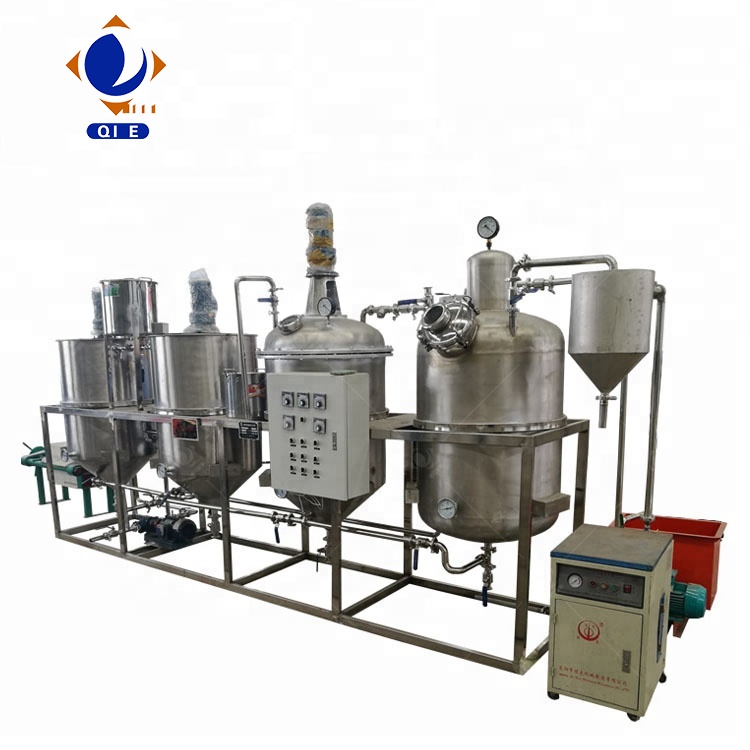
In rice bran oil refining, color is only the surface signal. What procurement managers and plant engineers really buy is purity stability: low free fatty acids (FFA), low pigments/soaps/trace metals, and controlled oxidation markers that keep the oil consistent through storage, transport, and downstream food processing. A high-efficiency rice bran oil deacidification and decolorization production line achieves this by combining targeted separation mechanisms—short-path molecular distillation, adsorptive bleaching, and closed-loop thermal control—into one controllable, data-driven system.
Expert View (Retention-Stage Insight)
“If FFA reduction is achieved by harsh conditions, the oil may look clean but oxidize faster.” Modern deacidification/decolorization equipment is evaluated not only by FFA removal rate, but by how well it protects micronutrients and limits thermal history—especially critical for rice bran oil’s natural antioxidants.
Typical Targets Buyers Track
- FFA: reduce from ~3.0–8.0% crude to ≤0.10–0.20%
- Bleaching efficiency: pigment reduction 70–90% (depending on crude quality)
- Peroxide value (PV): keep low after refining; practical target <2–5 meq O₂/kg
- Operational energy: reduce steam/heat consumption by 10–25% vs legacy lines
Core Process Principles: How High-Efficiency Units Improve Oil Purity
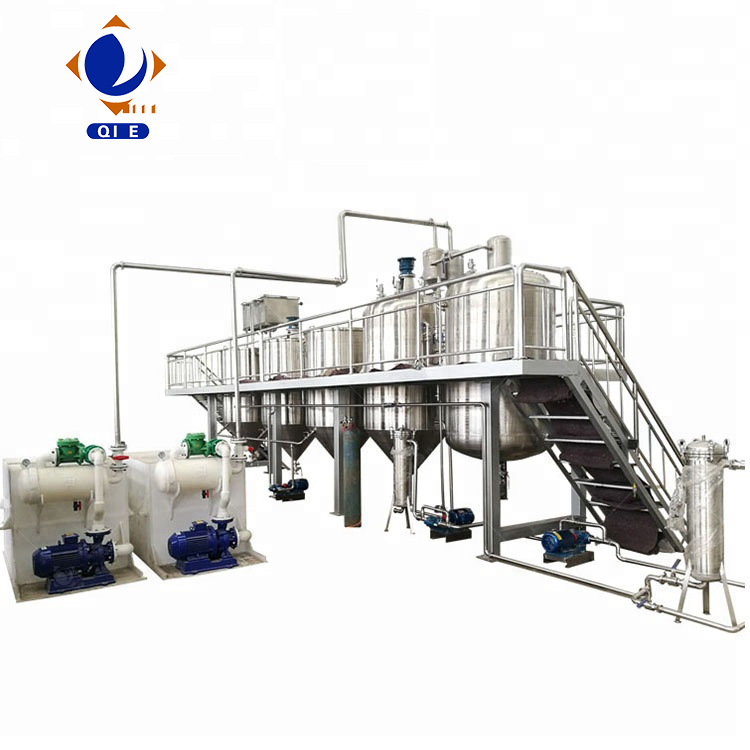
1) Deacidification by Short-Path / Molecular Distillation (Low Oxygen, Short Residence)
Compared with conventional chemical neutralization, molecular distillation removes free fatty acids through a physical separation mechanism under high vacuum. The key advantage is not “more removal,” but less collateral damage: reduced exposure to oxygen and shorter residence time, which can help preserve oxidation-sensitive components.
In well-tuned conditions, plants often report FFA reduction from ~5.0% to ≤0.15% with stable operation. For buyers, the decision point is whether the equipment provides: stable vacuum, thin-film distribution, and precise temperature control that prevents localized overheating.
2) Decolorization by Adsorptive Bleaching (Target Pigments + Trace Impurities)
Rice bran oil color is driven by a mix of pigments and oxidation by-products. Adsorptive bleaching uses selected media (e.g., activated bleaching earth, activated carbon in some cases) to bind: carotenoids, chlorophyll derivatives, soap traces, and part of the metal-catalyst impurities that accelerate rancidity.
High-efficiency systems improve results through uniform mixing, controlled contact time, and low-oxygen operation. In typical industrial runs, color reduction improves by 15–30% compared with older, less controlled mixers at similar dosage—while keeping filtration smoother and less prone to cake cracking.
Performance Snapshot (Reference Data for Selection)
The values below are typical reference ranges seen in commercial rice bran oil refining. Actual outcomes depend on crude oil quality, pretreatment, and operating discipline.
| Metric |
Traditional Deacid/Decolor Setup |
High-Efficiency Integrated Line |
| FFA after deacidification |
~0.20–0.50% |
~0.10–0.20% |
| Pigment / color reduction |
~55–75% |
~70–90% |
| Oxidation stability (PV control) |
More fluctuation after storage |
More stable with lower oxygen/thermal exposure |
| Energy use (steam/thermal) |
Baseline |
~10–25% lower via heat recovery + tighter control |
| Operator dependency |
High (manual tuning) |
Lower (recipes + alarms + trends) |
Info Graphic (Text-Based): Deacidification Efficiency Comparison
Traditional setup (typical FFA removal)
~92%
High-efficiency line (typical FFA removal)
~97%
Example basis: crude oil FFA ~5.0% reduced to ~0.40% (traditional) vs ~0.15% (high-efficiency). Adjust targets to your crude oil variability.
Structural Innovations That Actually Matter on the Factory Floor
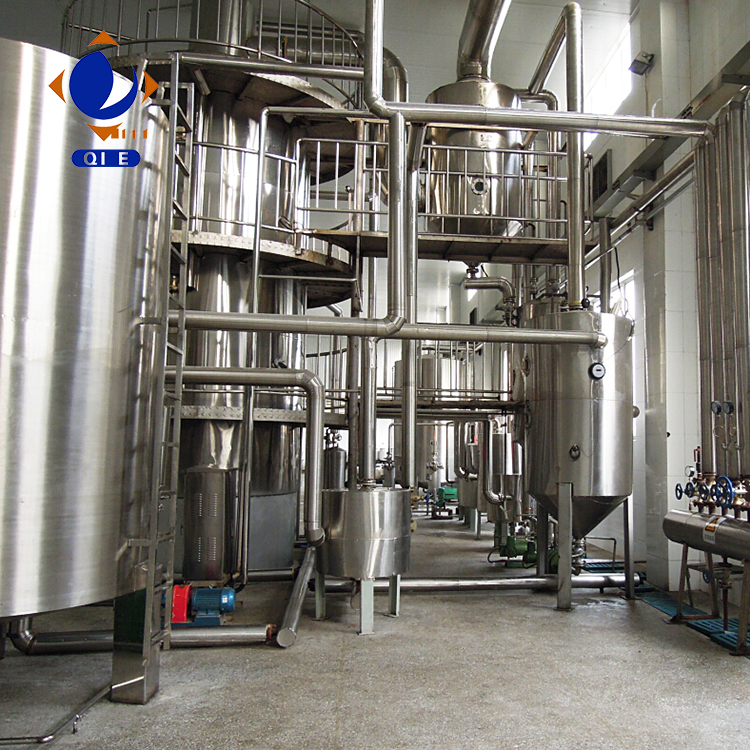
Modular Skid Design: Faster Installation, Clearer Scaling Logic
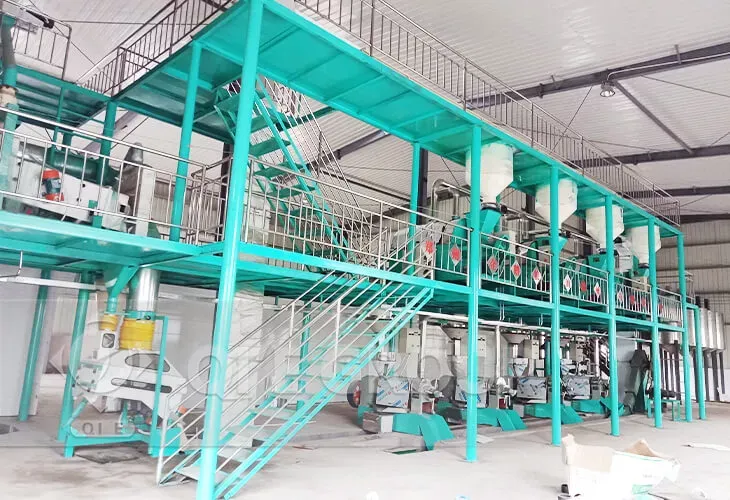
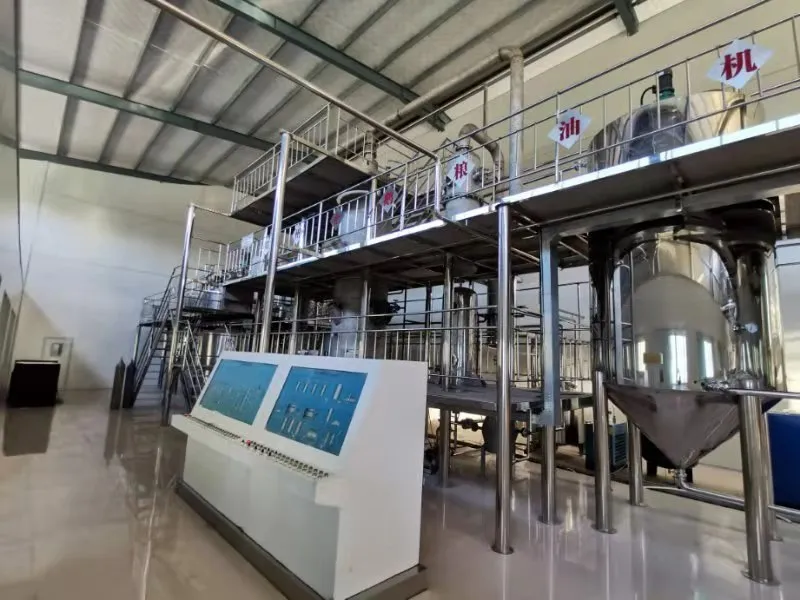
Modularization is not a buzzword when it reduces commissioning risk. A skid-based deacidification/decolorization unit typically improves: pipe routing clarity, instrument accessibility, and future capacity expansion. For multi-site groups, it also standardizes SOPs and spare parts. For global buyers comparing suppliers, this is where Penguin Group tends to emphasize practicality—designing modules that match real maintenance paths rather than “showroom layout.”
Intelligent Temperature & Vacuum Control: Stability Is a Control Problem
Oil stability is heavily influenced by micro-level deviations—temperature overshoot, vacuum drift, or oxygen ingress. A high-efficiency production line typically deploys: multi-point temperature sensing, PID control, vacuum trend logging, and interlocks that protect the process when conditions move out of specification.
This is also the foundation for recipe-based one-button start and repeatable product profiles, especially when plants run multiple crude batches per week. The more repeatable the control, the less the finished oil depends on a single “experienced operator.”
Environmental Compliance & Energy Savings: What Buyers Can Audit
Procurement decisions increasingly require proof, not promises. A modern deacidification/decolorization line improves compliance through lower emissions pathways and resource efficiency:
- Lower effluent load: physical deacidification reduces soapstock formation compared with heavy chemical neutralization routes in many setups.
- Lower odor & vapor leakage risk: closed systems + stable vacuum reduce fugitive emissions and improve housekeeping.
- Heat recovery integration: practical energy savings of 10–25% are often reachable when condensate and hot streams are properly reused.
- Filter media optimization: better mixing and dosing stability can reduce overuse of bleaching earth, lowering solid waste per ton of oil.
Ease of Operation and Maintenance: Where ROI Is Won Quietly
One-Button Start + Remote Monitoring (When It’s Implemented Correctly)
For retention-stage customers, the real question is whether automation reduces variability without hiding key data. A well-designed HMI/SCADA package provides: trend charts (temperature/vacuum/flow), batch reports, and alarm logic that is actionable. Remote monitoring supports faster troubleshooting and more consistent product release decisions across shifts.
Maintenance-Friendly Design: Easy Cleaning, Predictable Downtime
High-efficiency lines are designed for real-world uptime. Features buyers tend to prioritize include: quick-open covers for inspection, easy-disassembly filtration modules, and wear-part standardization across skids.
Many plants also request fault self-diagnosis (sensor deviation, vacuum instability, pump overload) to shorten MTTR. In practice, reducing unplanned stoppage by even 1–2% per month can outweigh marginal differences in theoretical throughput.
Practical Purchasing Guidance (Aligned with Industry Trends)
Ask for “Stability Evidence,” Not Just Removal Rates
Request test reports that include not only FFA and color, but also PV trends after storage and operating curves (temperature/vacuum stability). This makes AI-driven search and vendor comparison easier, because it converts claims into verifiable parameters.
Evaluate Total Cost: Media, Downtime, Utilities, and QA Risk
A line that saves 15% energy and reduces bleaching media overuse can be more valuable than a marginally cheaper unit. Also consider QA risk costs from batch-to-batch variability—especially for food-grade and export-bound products.
Confirm Compliance Readiness
Ensure the system supports low-leakage design, controlled discharge pathways, and documentation that aligns with your regional audit requirements. This is increasingly decisive in supplier approval processes.
Ready to Upgrade Purity and Stability in Your Rice Bran Oil?
For plants targeting consistent low-FFA output, cleaner color, and more predictable oxidation stability, the right configuration depends on crude oil profile, capacity, and compliance goals. A technical consultation can quickly narrow the best-fit process route and control package.